
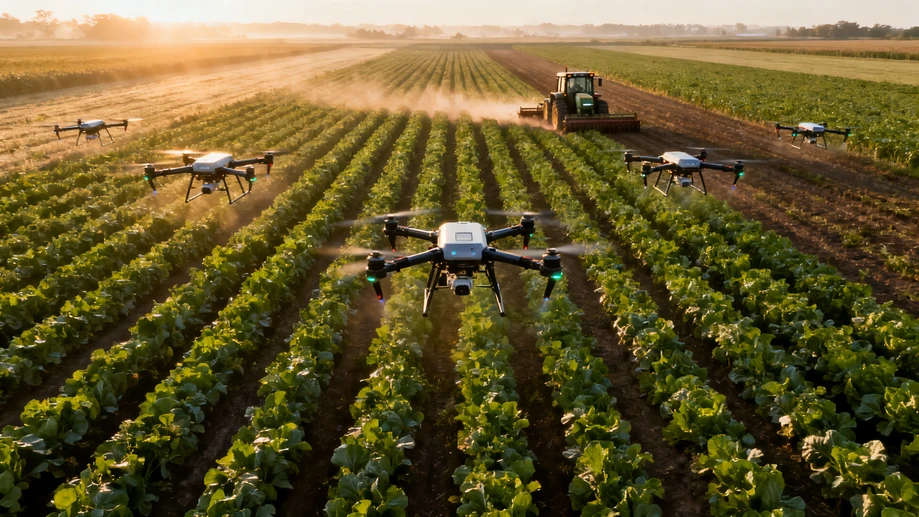
Farmers Harness AI and Drones to Revolutionize Crop Monitoring Practices
Advanced sensors and machine learning algorithms enable real-time field analysis transforming traditional farming methods globally
Agricultural landscapes are undergoing a technological metamorphosis as artificial intelligence integrates with farming equipment. Across continents, growers are deploying intelligent systems that continuously analyze soil conditions and plant health through sophisticated sensors. These devices capture critical data points including moisture levels, nutrient concentrations, and early disease indicators that human scouts might overlook. The constant stream of information creates comprehensive digital maps of fields, revealing patterns and variations invisible to the naked eye. This shift represents a fundamental change in how farmers interact with their land, moving from periodic manual checks to persistent automated surveillance.
Transitioning from data collection to practical application, drone technology has emerged as the physical manifestation of this digital revolution. Modern agricultural drones now carry multispectral cameras that capture far more than standard aerial imagery. They detect subtle variations in plant chlorophyll levels and thermal signatures that indicate stress before visible symptoms appear. Equipped with specialized software, these flying laboratories can distinguish between crop varieties and identify weed infestations with remarkable precision. The real breakthrough comes when these systems automatically generate prescription maps that guide variable-rate application equipment, ensuring resources target only areas needing intervention.
Beyond immediate field applications, the accumulated data creates powerful predictive models that forecast seasonal outcomes. Machine learning algorithms digest historical patterns alongside current observations to generate yield projections with unprecedented accuracy months before harvest. These forecasts prove invaluable for operational planning and financial decisions, allowing better resource allocation and reducing costly surprises. The technology also helps anticipate pest migrations and disease outbreaks by analyzing weather patterns and regional crop health reports. Such predictive capabilities enable proactive rather than reactive management strategies.
An interesting development in this technological evolution involves hyperspectral imaging capabilities. Unlike standard cameras capturing only visible light, these advanced sensors detect hundreds of spectral bands across electromagnetic wavelengths. This allows identification of specific plant compounds and subtle physiological changes undetectable through conventional means. Farmers can now monitor nitrogen utilization efficiency at molecular levels and detect fungal infections before spores become visible. This granular insight facilitates truly precision agriculture where interventions happen at optimal timing with minimal inputs.
Implementation challenges remain despite the clear advantages, particularly regarding technological accessibility and data interpretation. Smaller farms often struggle with initial investment costs and technical expertise required to operate sophisticated systems. However, emerging subscription-based services and cooperative equipment sharing models are gradually democratizing access. Training programs developed in partnership with agricultural universities help bridge the knowledge gap, teaching farmers to translate data streams into actionable decisions. The learning curve proves worthwhile as adopters report significant reductions in input costs alongside improved yields.
Looking forward, the convergence of agricultural technology points toward fully integrated farm management systems. Next-generation platforms will likely incorporate weather station networks, irrigation controls, and equipment telematics into unified interfaces. Early experiments with autonomous field robots suggest another leap forward in precision farming capabilities. These developments collectively signal a transformation where data-driven decisions replace traditional farming intuition. The agricultural sector stands at the threshold of an era defined by unprecedented efficiency and scientifically informed cultivation practices.