
Farms Embrace AI and Drones to Revolutionize Crop Monitoring Practices
Agricultural technology surges forward as intelligent systems deliver real-time field insights and predictive analytics
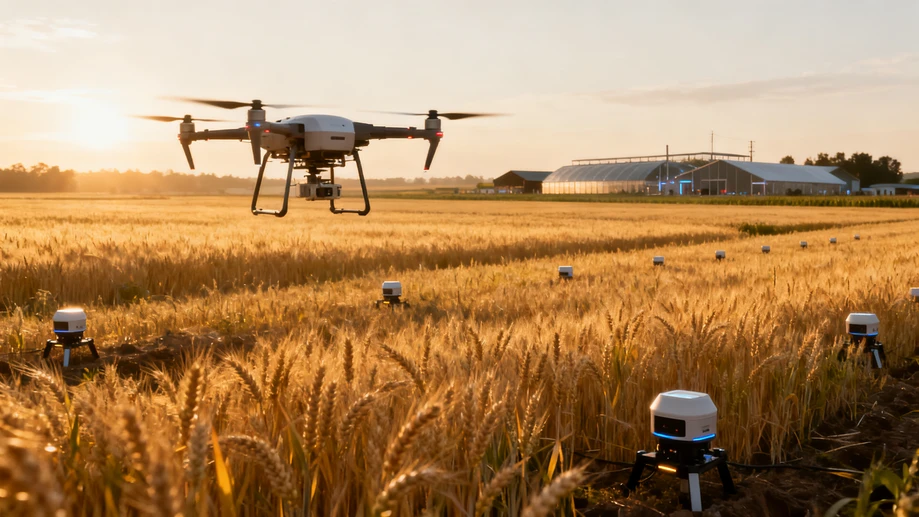
Across sun-drenched fields, a quiet revolution is unfolding as farmers deploy autonomous drones equipped with multispectral cameras. These flying sentinels capture detailed crop health data invisible to the naked eye, mapping chlorophyll levels and moisture stress across thousands of acres in a single morning flight. The shift from manual scouting to aerial surveillance represents a fundamental transformation in agricultural management, allowing precise interventions before problems become visible to human observers. This technological leap addresses the critical challenge of scaling precision agriculture to meet global food demands.
Ground-based sensors now complement aerial data by continuously monitoring soil conditions and microclimate variations. Buried at root level, these devices track nutrient availability and temperature fluctuations while transmitting information to cloud-based platforms. Artificial intelligence algorithms process this torrent of information, identifying patterns that predict pest outbreaks or irrigation needs weeks before traditional methods could detect them. The integration of disparate data streams creates a comprehensive digital twin of entire farming operations, enabling simulations that forecast outcomes under different management scenarios.
Machine learning models trained on historical harvest data now provide yield predictions with remarkable accuracy, allowing farmers to optimize storage logistics and negotiate contracts confidently. These systems learn from each growing season, refining their algorithms to account for regional weather anomalies and soil variability. Interestingly, modern sensors can detect subtle plant stress signals emitted through chemical changes in root systems, a phenomenon farmers historically recognized through leaf discoloration but now quantified at molecular levels. This scientific insight allows corrective measures at the earliest biological stage possible.
The economic implications are profound as technology reduces input costs while boosting output. Variable-rate applicators guided by AI prescriptions now distribute water, fertilizers, and pesticides with centimeter-level precision, slashing chemical usage by up to forty percent in pilot programs. Automated irrigation systems respond to real-time moisture data, conserving resources while preventing yield-limiting drought stress. Such efficiency gains prove particularly valuable amid fluctuating commodity prices and increasing environmental regulations that demand stricter resource management from agricultural producers.
Implementation challenges remain despite rapid adoption, especially regarding data standardization and cybersecurity vulnerabilities in connected farm equipment. Rural connectivity gaps also hinder real-time data transmission in remote regions, though satellite-based solutions are gradually bridging this divide. Nevertheless, the trajectory points toward increasingly autonomous farming systems where human decision-making focuses on strategic oversight rather than manual execution. As algorithms grow more sophisticated, they may soon prescribe customized crop varieties tailored to specific field microenvironments, potentially transforming seed selection itself.