
Is Your Ice Cream Melting Faster Than the Poles?
How Arctic Heatwaves Are Outpacing Your Summer Treat
Forget sweating through your t-shirt – the real heatwave drama is unfolding hundreds of miles north. Scientists monitoring the Arctic report that the region is warming up to four times faster than the global average. That's not just a bad summer; it's a fundamental rewiring of one of Earth's most critical cooling systems. Imagine your freezer suddenly deciding to run at half power while your oven cranks up – that's the kind of imbalance we're seeing. The consequences stretch far beyond polar bears, potentially messing with weather patterns that dictate whether your weekend barbecue gets rained out or your hometown gets hit by an unexpected drought. The poles aren't just distant ice deserts; they're the planet's thermostat, and right now, the dial is stuck on 'high'.
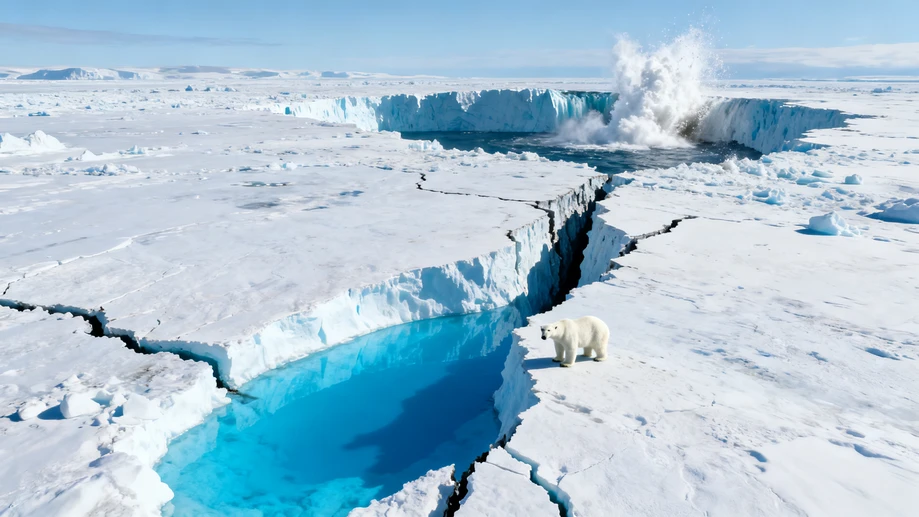
Think polar bears are just cute faces on soda cans? Try picturing them as climate refugees on shrinking ice floes. Their iconic hunting platform – sea ice – is vanishing at an alarming clip. Summer sea ice cover has shrunk by about 40% since satellite records began in the late 1970s. It's like their entire neighborhood is dissolving beneath their paws. Less ice means less hunting ground, forcing bears to swim farther, expend more energy, and often go hungry. Some are even turning to desperate measures, like raiding seabird colonies or human settlements – a dangerous shift for both bears and people. This isn't just a wildlife documentary; it's a real-time collapse of an Arctic ecosystem that's been stable for millennia.
Beneath the surface, a far more insidious threat is thawing: permafrost. This frozen ground, locking away ancient plant and animal matter for thousands of years, is defrosting like a forgotten bag of spinach at the back of your fridge. When it thaws, microbes wake up and start munching, releasing massive amounts of carbon dioxide and methane – potent greenhouse gases. It's a vicious cycle: warming thaws permafrost, releasing gases that cause more warming, thawing more permafrost. Scientists estimate the Arctic permafrost holds nearly 1.5 trillion metric tons of frozen carbon – roughly double what's currently in the atmosphere. This isn't just a slow leak; it's potentially a massive, uncontrollable belch of ancient carbon that could turbocharge global heating.
Meanwhile, down south, Antarctica isn't faring much better. Gigantic glaciers, like the Thwaites Glacier (nicknamed the "Doomsday Glacier" for good reason), are losing ice at accelerating rates. Warm ocean water is sneaking underneath, melting them from below like a blowtorch on an ice cube. The sheer volume of ice locked up in Antarctica is mind-boggling – if the West Antarctic Ice Sheet fully collapsed, global sea levels could rise by over 3 meters (nearly 10 feet). Coastal cities worldwide are essentially betting against this happening anytime soon. The cracking and calving of icebergs the size of cities isn't just a spectacular natural event; it's the sound of the planet's largest ice reserves draining away.