
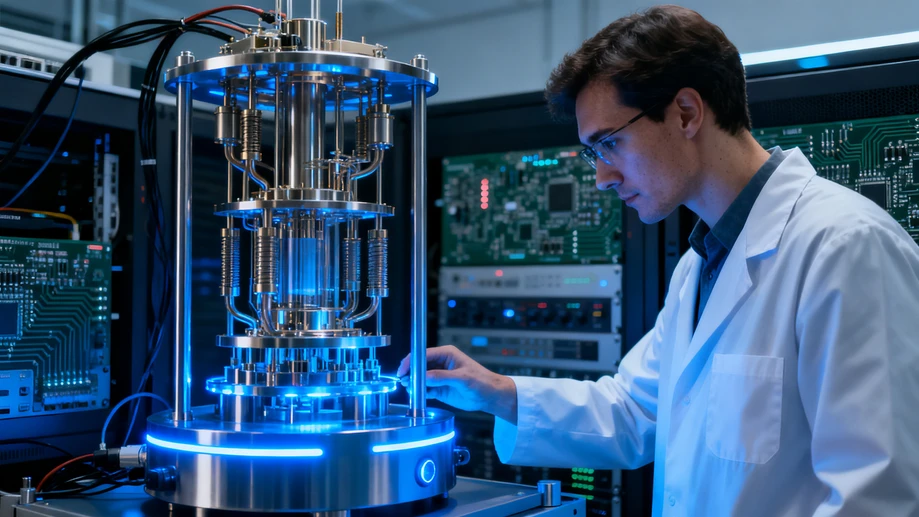
Are Quantum Computers About to Become Your Everyday Helper?
Discover how recent global breakthroughs in quantum technology are bringing revolutionary changes to our daily routines without the sci-fi hype.
Imagine a world where your smartphone could solve complex problems in seconds that today's supercomputers take years to crack. That's the promise of quantum computing, and thanks to scientists worldwide, we're edging closer to turning this dream into reality. For decades, computers relied on bits—tiny switches representing 0s or 1s—but quantum computers use qubits that can be both at once, thanks to quirky quantum physics. This isn't just lab jargon; it's a leap that could redefine how we live. Just think about how the internet transformed communication—quantum tech might be the next big wave, making everyday tools smarter and faster.
Recent breakthroughs have pushed quantum computing from theoretical puzzles to tangible innovations. In 2023, researchers at companies like IBM and Google achieved milestones in error correction, reducing the glitches that plagued early prototypes. For instance, Google's Sycamore processor demonstrated "quantum supremacy" by solving a task in minutes that would take a classical computer millennia. This progress stems from global collaborations, including teams in the US, Europe, and Asia, sharing data to refine qubit stability. What makes this exciting is its real-world impact: quantum computers can simulate molecules at unprecedented speeds, potentially accelerating drug discovery for diseases like Alzheimer's, or optimizing traffic flows in smart cities to cut your commute time.
These quantum leaps aren't confined to high-tech labs; they're trickling into our homes and workplaces with practical benefits. Take your morning routine: quantum algorithms could analyze vast datasets to personalize your health apps, suggesting diets based on genetic quirks or predicting allergies before symptoms appear. In finance, banks are testing quantum tech to detect fraud instantly, saving billions. Even energy grids might become smarter, using quantum simulations to balance supply and demand, ensuring your lights stay on during storms. As one expert puts it, "It's like upgrading from a bicycle to a jet—suddenly, complex calculations become effortless." Such innovations stem from efforts like the EU's Quantum Flagship program, fostering cross-border research for everyday applications.
Of course, challenges remain before quantum computers become household staples. Current systems require ultra-cold temperatures, making them bulky and energy-hungry. But engineers are developing compact versions using photonics, aiming for desktop-sized devices by 2030. If these hurdles are overcome, future gadgets could include quantum-enhanced AI assistants that understand natural language better than Siri. Ultimately, this isn't about science fiction—it's about harnessing a global wave of creativity to make life smoother. As quantum tech evolves, it might quietly power your smartwatch or fridge, proving that the biggest breakthroughs often start in collaborative minds, not lonely labs.