
The Incredible Journey of Your Smartphone's Battery!
Unveiling the Secrets Behind the Power That Keeps You Connected
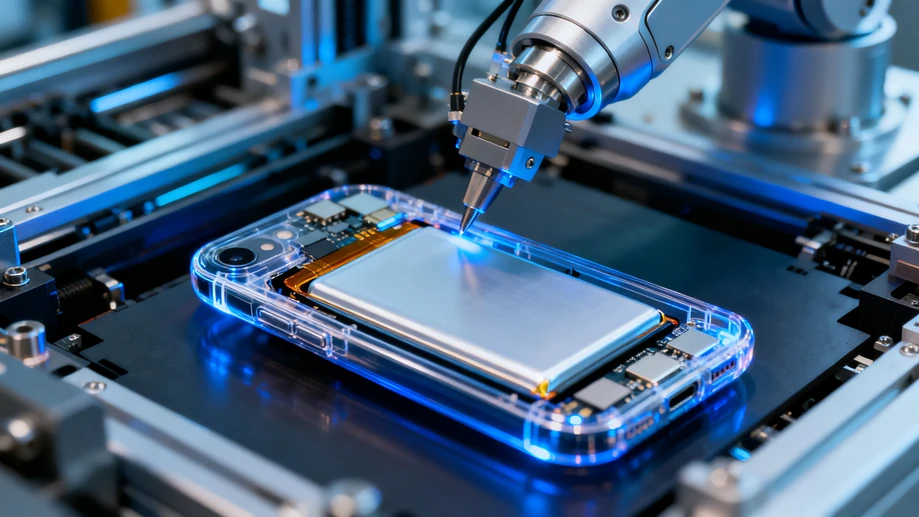
Ever wonder how that slim rectangle in your pocket survives your Netflix binges and endless scrolling? The magic lies in a chemistry marvel perfected over decades. Modern lithium-ion batteries work like microscopic shuttles: ions travel between graphite and cobalt oxide layers during charging and discharging. What's truly astonishing is the energy density – a single gram of battery material stores enough power to light an LED bulb for hours. Yet this technology almost didn't exist; early prototypes in the 1980s exploded when researchers tried scaling them up. Today's batteries contain over a dozen safety features, including temperature sensors and pressure valves that turn your device into a fortress against thermal runaway.
Fast charging feels like sorcery, but it's pure physics orchestrated by clever engineering. When you plug in your phone, a negotiation begins: your charger and device communicate through digital handshakes to determine optimal voltage. Advanced phones like recent flagships split their battery into two cells that charge simultaneously, effectively halving charging time. Meanwhile, gallium nitride (GaN) chargers – those compact blocks replacing bulky adapters – operate at higher frequencies with less heat waste. The real game-changer? Software algorithms predicting your usage patterns. Your phone learns when you typically unplug and strategically slows charging to 80% overnight, only topping up to 100% right before your alarm rings to minimize battery stress.
Battery anxiety plagues 67% of smartphone users according to recent surveys, yet most damage comes from preventable habits. Contrary to popular belief, frequent partial charges are healthier than draining to zero – lithium-ion cells prefer shallow cycles. Heat remains the ultimate enemy: leaving your phone on a dashboard in summer can permanently erase 20% of its capacity in months. Manufacturers now embed "battery health" menus showing your power cell's remaining lifespan. Pro tip: storing devices at 50% charge during long inactivity prevents the dreaded "deep discharge" that kills batteries. And if your phone ever swells? That's not extra power – it's dangerous gas buildup requiring immediate replacement.
The recycling revolution is quietly transforming electronics sustainability. Specialized facilities shred batteries into "black mass" – a powder containing valuable cobalt, nickel and lithium. Through hydro-metallurgical processes, over 95% of these materials get recovered for new batteries. One Toronto startup even extracts pure lithium using sound waves in a zero-waste method. Meanwhile, researchers experiment with organic alternatives: a Swedish team created a battery using alfalfa and pine resin that decomposes like leaves. While current recycling rates hover around 5% globally, new EU regulations will soon force manufacturers to incorporate recycled materials into all new devices – a circular economy in the making.
Tomorrow's batteries are emerging from labs with mind-bending capabilities. Solid-state batteries replace liquid electrolytes with ceramic or polymer conductors, potentially doubling energy density while eliminating fire risks. Scientists at MIT recently demonstrated a paper-thin flexible battery that can be woven into clothing. Even more radical? Aluminum-air batteries that generate power by reacting with oxygen, offering week-long phone runtime from replaceable cartridges. But the real showstopper might be ambient energy harvesting: prototypes already exist that trickle-charge using Wi-Fi signals or body heat. Imagine a phone that gains power while in your pocket – the ultimate liberation from wall sockets.