
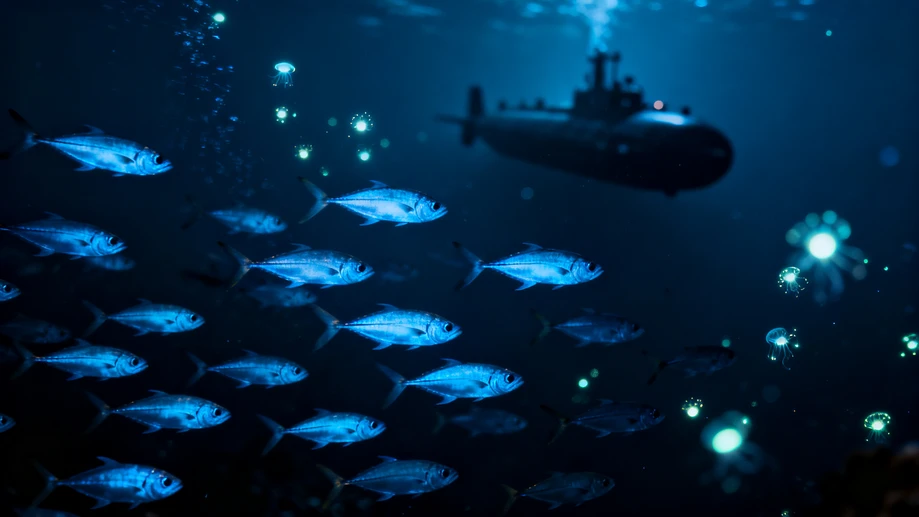
Can Fish Really Light Up the Ocean Depths Like Underwater Fireflies?
Exploring the Glittering Secrets of Deep-Sea Bioluminescence
Imagine diving into the pitch-black ocean, deeper than sunlight can penetrate, only to witness a sudden explosion of living starlight. This isn't fantasy; it's the everyday reality of Earth's largest habitat. Over 90% of deep-sea creatures possess the extraordinary ability to create their own light through bioluminescence – nature's built-in flashlight system. From tiny plankton to elusive anglerfish, these organisms transform the abyss into a mesmerizing light show. Scientists estimate this phenomenon occurs more frequently in the ocean than anywhere else on the planet, turning vast stretches of darkness into a canvas of living neon. The sheer scale of this underwater illumination rivals the number of stars visible from Earth on a clear night, yet it remains largely unseen by human eyes.
The magic behind this glow involves a simple chemical reaction. Creatures produce light when a molecule called luciferin reacts with oxygen, often aided by an enzyme named luciferase. This cold light generates almost no heat, making it incredibly energy-efficient. Different organisms utilize various colors: vampire squid eject blinding blue clouds to confuse predators, while dragonfish produce near-invisible infrared beams to hunt undetected. The evolutionary reasons are as diverse as the lights themselves. Some creatures use flashes like Morse code to identify mates in the darkness, others deploy glowing lures to attract prey, and many employ sudden bursts of light as a burglar alarm to startle attackers. This biological innovation is nature's solution to life in perpetual night.
Remarkably, this deep-sea light show influences our surface world. Marine snow – the constant shower of dead plankton and organic debris – often carries bioluminescent bacteria downward, creating shimmering trails through the water column. This nutrient transport feeds entire ecosystems miles below. Even migrating animals rely on the glow; some squid species adjust their depth based on faint bioluminescence patterns to avoid predators during their nightly journeys toward the surface. Recent research reveals that human activities, particularly deep-sea mining noise and light pollution from vessels, can disrupt these delicate light-based communication systems. The faint flashes that coordinate mating or hunting are drowned out by artificial interference.
Beyond scientific fascination, bioluminescence holds tangible benefits for humanity. Medical researchers harness luciferase enzymes as "biological flashlights" to track cancer cells in real-time within living organisms, revolutionizing drug development. Environmental scientists deploy bioluminescent bacteria as sensitive pollution detectors that dim when toxins are present. Even everyday safety applications exist: glow sticks used by campers and emergency responders mimic jellyfish chemistry. Perhaps the most accessible wonder occurs during coastal "milky sea" events, where massive blooms of glowing algae transform waves into liquid light, allowing beachgoers to literally swim through stardust on tropical shores.
Protecting these living lights becomes increasingly urgent. Climate change alters ocean chemistry, potentially disrupting the delicate reactions behind bioluminescence. Deep-sea trawling destroys entire light-dependent communities before we fully understand them. Conservation efforts now prioritize creating "bioluminescent reserves" in critical zones like the Bahamas and Puerto Rico's famous glowing bays. Citizen science projects invite coastal residents to report bioluminescent events, helping scientists track changes. As we discover more about this hidden light language – from the synchronized flashing of dinoflagellates to the complex light patterns on giant squid – we uncover not just ocean secrets, but fundamental biological innovations that could illuminate solutions for human challenges in medicine, sustainable lighting, and environmental monitoring.