
Can Your Smartphone Heal Itself Like Human Skin?
Self-Healing Materials Are Quietly Revolutionizing Everyday Gadgets
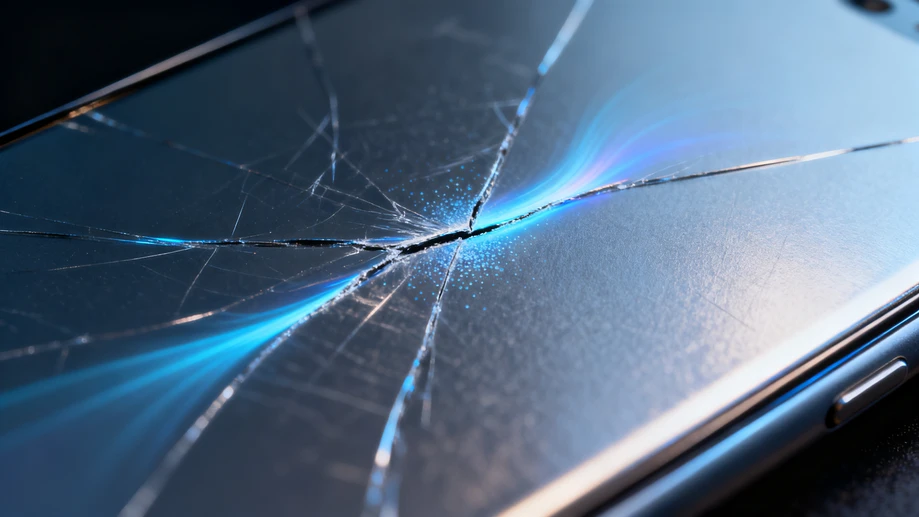
Imagine dropping your phone, watching in horror as a spiderweb of cracks spreads across the screen, only to see those cracks slowly fade away within minutes like magic. This isn't science fiction; it's the burgeoning reality of self-healing materials, a frontier in materials science poised to transform our relationship with everyday objects. Inspired by biological systems – think skin healing a cut or a lizard regrowing a tail – scientists are engineering polymers, composites, and even metals embedded with microscopic capsules or vascular networks. When damage occurs, these internal reservoirs release healing agents (like monomers or catalysts) that flow into the fissure, react, and solidify, effectively "stitching" the material back together. The implications stretch far beyond scratch-resistant phone screens, promising longer-lasting car paints, self-repairing airplane wings, and infrastructure that can mend its own cracks.
The magic lies in the ingenious design at the nanoscale and microscale. One prevalent approach involves embedding tiny, liquid-filled capsules within the base material. These capsules, often made of polymers like urea-formaldehyde, are designed to rupture under stress. When a crack propagates through the material, it breaks these capsules open, releasing their payload – typically a monomer liquid and a separate, embedded catalyst. The monomer flows into the crack via capillary action, encounters the catalyst particles, and undergoes polymerization, hardening to fill the gap and restore structural integrity. Another method mimics human blood vessels, creating a 3D network of hollow channels throughout the material filled with healing agents. Damage anywhere severs these channels, releasing the healing fluid into the crack. Researchers are even exploring intrinsic self-healing using dynamic bonds within the polymer chains themselves that can break and reform when heated or exposed to light.
This technology is rapidly moving from lab curiosities to tangible products enhancing durability and reducing waste. In the automotive world, self-healing clear coats are already available. A minor scratch from a rogue shopping cart or tree branch triggers a chemical reaction at the molecular level, causing the polymer chains to rearrange and flow back into the groove, often within hours under sunlight or mild heat. Imagine never worrying about key scratches again! Aerospace engineers see immense potential for composites used in aircraft fuselages and wings. Micro-cracks developing from stress and vibration could be autonomously sealed mid-flight, preventing catastrophic failure and drastically extending maintenance intervals. Construction materials like concrete are also getting smarter. Concrete infused with bacteria spores that activate upon water ingress (from a crack) can produce limestone, effectively plugging the leak and preventing corrosion of internal steel reinforcements – a potential game-changer for bridges and tunnels.
While the promise is enormous, challenges remain. Current self-healing systems are often best suited for repairing small-scale, localized damage like micro-cracks or shallow scratches. Deep gouges or catastrophic breaks are beyond their capability. The healing process might also be limited to a single repair event at a specific location if the embedded healing agent is depleted, though multi-cycle systems are in development. Environmental factors like temperature extremes can affect the speed and efficiency of the healing reaction. Furthermore, integrating these sophisticated materials cost-effectively at scale for mass-market products is an ongoing hurdle. Researchers are actively working on more robust, multi-functional systems and driving down production costs.
The future of self-healing materials is incredibly bright. We're moving towards truly resilient products that last longer, require less maintenance, and reduce our environmental footprint by minimizing replacements. Beyond gadgets, cars, and buildings, imagine medical implants that self-seal to prevent infection, water pipes that mend leaks autonomously, or even protective gear for athletes and workers that regains its integrity after an impact. As materials science continues to unlock nature's secrets, the line between the inanimate and the living blurs, ushering in an era where our possessions possess a remarkable ability to recover, just like we do. The next scratch on your device might just be its last.