
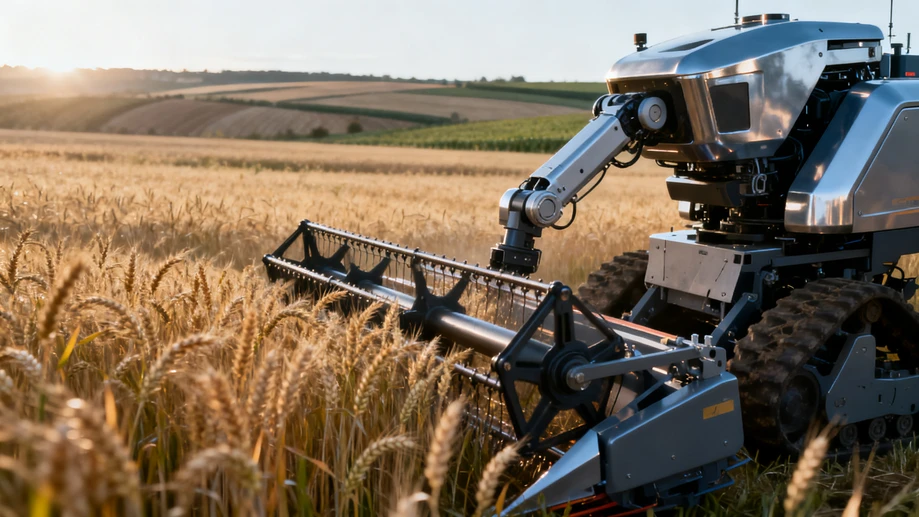
Agricultural Robotics Are Revolutionizing Global Farming Efficiency
Autonomous machines and AI-driven systems reshape traditional agriculture with unprecedented precision and productivity gains
Farmers worldwide are witnessing a technological renaissance as robotic systems transition from experimental novelties to essential field partners. These intelligent machines now navigate complex terrain with remarkable accuracy, performing tasks from dawn until dusk without fatigue. The integration of advanced sensors allows these robots to perceive their environment with human-like awareness, avoiding obstacles while maintaining perfect row alignment. This continuous operation capability addresses critical labor shortages that have plagued the industry for decades, particularly during crucial planting and harvesting windows when timing determines crop success. As development accelerates, production costs decrease, making robotic solutions increasingly accessible even for smaller operations.
Precision weeding exemplifies robotics' transformative impact, where computer vision systems distinguish crops from invasive plants with near-perfect accuracy. Mechanical arms equipped with micro-sprayers or laser targeting eliminate unwanted growth without blanket herbicide application, reducing chemical usage by up to 90% according to recent field trials. Simultaneously, autonomous drones conduct daily aerial surveillance, generating detailed crop health maps through multispectral imaging. These flying sentinels detect irrigation issues, nutrient deficiencies, and disease outbreaks days before human observation would notice, enabling targeted interventions that preserve yields. Such capabilities fundamentally alter farm management strategies, shifting from reactive to predictive approaches.
Soil analysis robots represent another frontier, autonomously collecting and testing core samples across vast acreage. Equipped with penetrometers and spectrometers, these mobile laboratories measure moisture retention, compaction levels, and organic content at various depths. The collected data feeds optimization algorithms that generate hyper-localized soil amendment plans, ensuring resources concentrate where they deliver maximum benefit. This granular approach contrasts sharply with traditional uniform field treatment, significantly boosting input efficiency while minimizing environmental runoff. The continuous data stream also creates historical benchmarks, allowing year-over-year comparisons that refine long-term soil management strategies.
Despite rapid progress, adoption faces infrastructure challenges including rural connectivity limitations and power supply constraints. Engineers counter these hurdles with edge computing solutions that process data locally on robots, reducing reliance on cloud connectivity. Solar-charging stations positioned strategically across fields extend operational endurance, while swappable battery systems enable near-continuous workflow. Regulatory frameworks struggle to keep pace with technological advancements, particularly regarding liability questions when autonomous systems operate near public roads. Industry consortia now collaborate with policymakers to establish safety standards and operational protocols that balance innovation with public protection.
An intriguing development involves robotic pollinators designed to supplement declining bee populations. These devices use electrostatic principles to collect and transfer pollen between flowers, mimicking natural pollination mechanisms. While not intended to replace insects, they provide crucial support during peak flowering periods when natural pollinators are insufficient. Early orchard trials demonstrate promising yield increases, particularly in controlled environments like greenhouses. This innovation highlights how robotics address not only labor challenges but also ecological imbalances, creating synergistic relationships between technology and natural systems.