
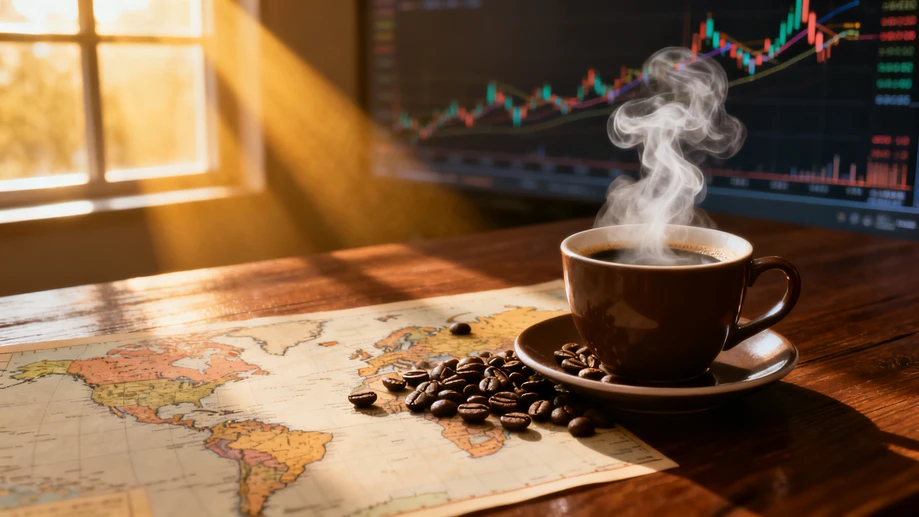
Why Does Your Morning Coffee Hold the World Economy Hostage?
The Hidden Power of Daily Brews Shaking Global Markets
Imagine your espresso as an economic time bomb. That Arabica bean swirling in your cup traveled through a complex web connecting farmers in Colombia to commodity brokers in London. Every sip represents a $200 billion global industry that employs over 125 million people. Coffee futures dictate morning routines from Tokyo to Toronto while influencing currency valuations in Brazil. When frost hits Brazilian plantations, breakfast inflation spikes in Berlin. Your caffeine habit literally fuels international trade dynamics.
Behind the innocent coffee mug lies an elaborate financial ecosystem. Green coffee trades twice on average before roasting, with speculators betting on weather patterns and political stability. Commodity exchanges in New York and London become battlegrounds where hedge funds and exporters clash over price volatility. During the 2021 supply chain crisis, coffee futures surged 70% as shipping containers piled up in ports. The knock-on effect? Your latte quietly increased faster than inflation rates in major economies.
Climate fluctuations now rattle this delicate balance like never before. Rising temperatures push coffee cultivation uphill while droughts throttle Vietnamese robusta harvests. Producers in Ethiopia's highlands watch yields decline as exotic pests migrate to warming regions. Specialty markets stagger when Colombian crops drown in flash floods. Financial derivatives once designed for risk management now amplify price swings, turning your morning brew into a leveraged instrument for Wall Street traders.
Global coffee culture creates startling economic paradoxes. While Americans consume 30% of exported beans, producing nations capture barely 10% of retail value. Blockchain initiatives now trace beans from Ethiopian hillsides to Brooklyn cafes, empowering smallholders through transparent pricing. Conscious consumers increasingly demand ethical supply chains, accelerating corporate sustainability pledges. Ironically, your decision between regular and fair-trade directly impacts banking loans for Peruvian co-ops.
Next time you order a flat white, remember its liquid journey contains more economic insight than a Bloomberg terminal. Each aromatic cup filters through currency conversions, interest rates, and geopolitical negotiations. This beverage's journey from flowering shrub to disposable cup epitomizes globalization's beautiful chaos. When the Federal Reserve adjusts interest rates, Brazilian farmers hold their breath. A single coffee bean carries more economic DNA than most currencies. And that, dear reader, is why economists watch coffee prices closer than the Dow Jones.