
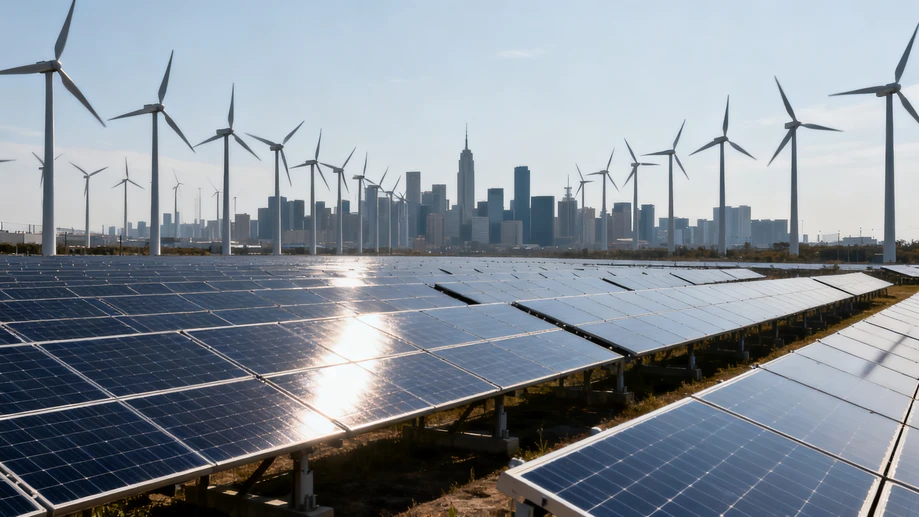
Renewable Energy Investments Are Booming Worldwide
Discover how the global shift to sustainable power is unlocking unprecedented financial opportunities and reshaping economies.
The world is witnessing a seismic shift in how we power our lives, and it's not just about saving the planet—it's a financial revolution. Renewable energy investments have surged from a niche market to a trillion-dollar industry, driven by global agreements like the Paris Accord. In 2023 alone, over $1.8 trillion flowed into solar, wind, and hydro projects, according to the International Energy Agency. This isn't just for big corporations; everyday investors are jumping in through green bonds and ESG funds. Why the rush? Simple: fossil fuels are becoming riskier bets due to volatile prices and climate regulations, while renewables offer stable returns. For instance, solar panel costs have plummeted by 80% in the last decade, making it cheaper than coal in many regions. This trend is transforming how families budget their energy bills and how cities plan infrastructure, proving that going green isn't just eco-friendly—it's economically savvy.
Across the globe, this investment wave is creating ripple effects in unexpected places. Take Europe, where countries like Germany and Spain are leading with massive wind farms that now supply over 40% of their electricity. In Asia, China's push for solar dominance has birthed new manufacturing hubs, employing millions in factories that churn out panels for export. Even in developing nations, micro-investments in off-grid solar are empowering rural communities, allowing farmers to run irrigation systems and small businesses without relying on unreliable grids. The numbers tell a compelling story: renewable energy jobs grew by 6.5% last year, outpacing fossil fuel sectors, and this boom is fueling innovation. Startups are developing battery storage solutions that store excess energy for cloudy days, while AI-driven grids optimize distribution. It's a win-win—reducing carbon footprints while boosting local economies, all from the comfort of our homes.
But this green gold rush isn't without its hurdles. High upfront costs remain a barrier, with large-scale projects requiring billions in capital, often deterring small investors. Technological challenges persist, too; for example, wind energy faces efficiency drops in low-wind areas, and solar panels degrade over time, needing costly replacements. Supply chain disruptions, like shortages of rare earth metals for batteries, can delay projects and inflate prices. Yet, these obstacles are sparking creative solutions. Governments are stepping in with subsidies and tax incentives, while fintech apps make it easier for individuals to crowdfund solar installations. On a personal level, this affects daily decisions—like choosing between a gas-guzzling car or an electric vehicle based on long-term savings. The key takeaway? Patience pays off; as technology advances, costs are expected to fall further, turning today's challenges into tomorrow's opportunities.
Looking ahead, the future of renewable investments is brighter than ever. Analysts predict that by 2030, renewables could account for over 50% of global electricity generation, up from 30% today. Innovations on the horizon include floating solar farms on reservoirs and hydrogen fuel cells for heavy industry, promising even greater efficiency. This evolution isn't just for energy giants—it's trickling down to households. Smart thermostats and energy-efficient appliances are becoming standard, helping families cut bills and earn credits by selling excess power back to the grid. In financial terms, this means diversified portfolios with green assets are outperforming traditional ones, offering resilience against market shocks. For the average person, it's about adapting to a new normal where investing in sustainability isn't optional; it's essential for financial security and a cleaner world.
In conclusion, the renewable energy boom is more than an environmental movement—it's a financial game-changer that's here to stay. By embracing this shift, we're not only combating climate change but also unlocking wealth and stability. So, whether you're a casual saver or a seasoned investor, now's the time to ride the green wave for a prosperous future.