
Why Are Central Banks Hoarding Gold Like Modern-Day Dragons?
The glittering truth behind the world's most ancient financial safety net
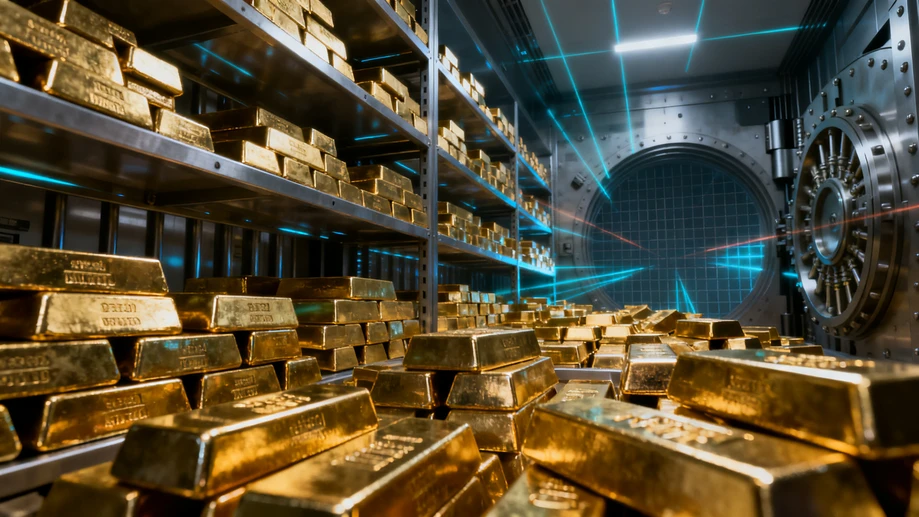
Picture this: vaults deeper than subway tunnels, stacked floor-to-ceiling with gold bars worth trillions. This isn't a heist movie set – it's the reality for central banks worldwide, who've been accumulating bullion at the fastest pace in 55 years. In 2022 alone, these financial institutions gobbled up 1,136 tonnes of gold, enough to forge a solid gold Eiffel Tower with leftovers. The frenzy continues unabated, raising eyebrows from Wall Street to Main Street. What's driving this Midas touch in the digital age? The answer lies in a perfect storm of geopolitical tension, inflation fears, and a timeless human truth: when uncertainty strikes, we still reach for the shiny stuff.
Gold's resume spans 5,000 years of economic crises, making it the ultimate survivor in the currency arena. While paper money can be printed into oblivion and digital currencies might vanish with a power outage, physical gold maintains an almost mythical status. Central banks know this better than anyone – the Federal Reserve's New York vault holds 6,190 tonnes beneath Manhattan streets, while Fort Knox safeguards 4,580 tonnes behind bomb-proof doors. This isn't just tradition; it's strategic armor. During the 2008 financial meltdown, gold prices soared 25% while stocks cratered, proving its crisis-proof credentials. Modern portfolio managers call it a "hedge against tail risks," but really, it's financial comfort food for nervous nations.
The current buying spree reveals fascinating geopolitical chess moves. Emerging economies like China and India are leading the charge, with Beijing secretly adding 102 tonnes to its reserves in 2023 alone. Meanwhile, Eastern European nations have tripled purchases since Russia's invasion of Ukraine. This isn't coincidence – it's a quiet revolution against dollar dominance. When the US froze Russia's dollar reserves, it sent shockwaves through global finance. Gold provides an escape hatch: neutral, untraceable, and untethered to any government. Even crypto-friendly millennials are paying attention – gold ETFs saw record inflows as Bitcoin crashed in 2022. The message? Digital is trendy, but when systems fail, atoms beat algorithms.
Beyond politics, simple economics fuels the gold rush. With inflation gnawing at currency values like termites, central banks need assets that won't rot. Gold's 8% average annual return over 20 years outshines many bonds. Then there's the logistical magic: unlike oil or wheat, gold doesn't spoil, need feeding, or require climate control. A single standard 400-ounce bar ($800,000 at today's prices) fits in a briefcase but backs entire currency systems. Germany learned this hard lesson when it tried repatriating 674 tonnes of gold from New York and Paris – the seven-year operation involved armored trains, decoy shipments, and James Bond-level secrecy. Why the hassle? Because possessing physical gold means never having to say "I trust your spreadsheet."
Will this golden age last? Mining analysts spot clues in Nevada's deserts, where extraction costs have hit $1,200 per ounce – nearly 60% of gold's current value. As easy deposits dwindle, new mines take 10-15 years to develop. Meanwhile, demand from jewelry and tech sectors grows 3% annually. This supply crunch could send prices soaring beyond 2020's record $2,075 peak. But the real story isn't in numbers – it's in psychology. When Turkey's lira collapsed, citizens traded smartphones for gold rings. When Sri Lanka defaulted, doctors accepted gold earrings as surgery payment. In our high-tech world, gold remains humanity's original panic button. Central banks aren't just hoarding metal; they're stockpiling certainty in its most elemental form.