
Three Manufacturing Miracles Transforming Your Daily Objects Right Now
Unseen technological revolutions inside everything from smartphones to sneakers
While you scroll through your phone or lace up your running shoes, microscopic manufacturing revolutions are reshaping ordinary items in extraordinary ways. Gone are the days of clunky assembly lines – today's factories resemble surgical theaters where precision meets artistry. At the heart of this transformation lies additive manufacturing, commonly known as 3D printing, which has evolved far beyond plastic trinkets. Aerospace giants now print fuel nozzles with internal cooling channels impossible to machine traditionally, while medical firms construct patient-specific titanium spinal implants layer by layer. Your next pair of bespoke sunglasses might emerge from a printer that simultaneously deposits flexible hinges and rigid frames in a single process, eliminating screws and adhesives entirely.
Simultaneously, nanotechnology has escaped laboratory confinement to redefine material science. Self-healing polymers containing microcapsules of healing agents automatically repair scratches on car finishes or phone cases when damaged. Fabric manufacturers weave silver nanoparticles into workout gear, creating odor-resistant clothing that neutralizes bacteria at a molecular level without chemicals. More remarkably, "smart dust" – sensors smaller than grains of sand – are embedded in industrial equipment to monitor structural stress in real-time, predicting maintenance needs before breakdowns occur. These invisible innovations mean your morning coffee mug might contain ceramic nanoparticles making it virtually unbreakable, while your bicycle frame incorporates carbon nanotubes lighter than aluminum yet stronger than steel.
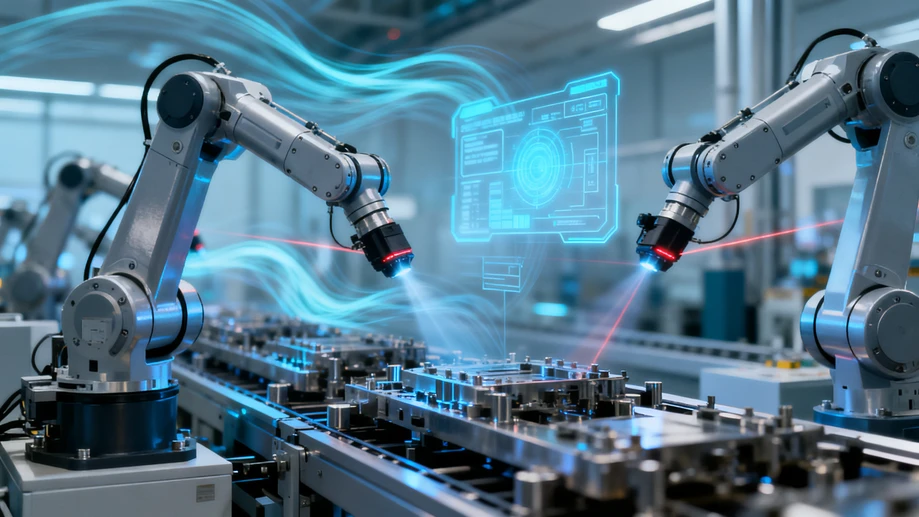
The third game-changer arrives through artificial intelligence orchestrating entire production ecosystems. Picture factories where robotic arms dynamically adjust their movements based on real-time quality control scans, while AI algorithms predict global material shortages six months ahead. Collaborative robots work alongside humans without safety cages, learning from technicians' movements to refine their precision. Supply chains now operate as neural networks: sensors in shipping containers reroute deliveries around storms, while machine learning optimizes warehouse layouts daily. This convergence means your electric vehicle's battery pack was likely assembled by machines that diagnosed microscopic defects during manufacturing – a process achieving near-zero error rates impossible for human eyes.
What binds these technologies is their seamless integration into mundane existence. Nano-coated bathroom tiles that repel grime reduce cleaning time, while 4D-printed shoe midsoles adapt their cushioning to your gait patterns during jogging. Industrial IoT sensors in kitchen appliances automatically order replacement parts before failures happen, much like your car's predictive maintenance alerts. This isn't science fiction but current reality: smart contact lenses with glucose monitors for diabetics entered production last year using precision micro-imprinting techniques perfected for computer chips.
As these technologies mature exponentially, their convergence promises even greater wonders. Researchers are developing multi-material printers that can create entire functional devices – think smartphones emerging fully assembled from a single machine. Nanoscale factories-on-a-chip could someday synthesize medicines inside your body, while AI-driven microfactories might localize production to your neighborhood, reducing shipping waste. These advancements won't happen in distant laboratories but within existing factories retrofitting old assembly lines with intelligent modules. The next industrial revolution won't be televised – it'll be embedded in your tomorrow's shoes, gadgets, and even the walls of your home, quietly reshaping reality one atomic layer at a time.