3 Unbelievable Truths About Melting Polar Caps You Can't Ignore
How the vanishing ice at Earth's poles is reshaping your weather, your coffee, and your future coastline
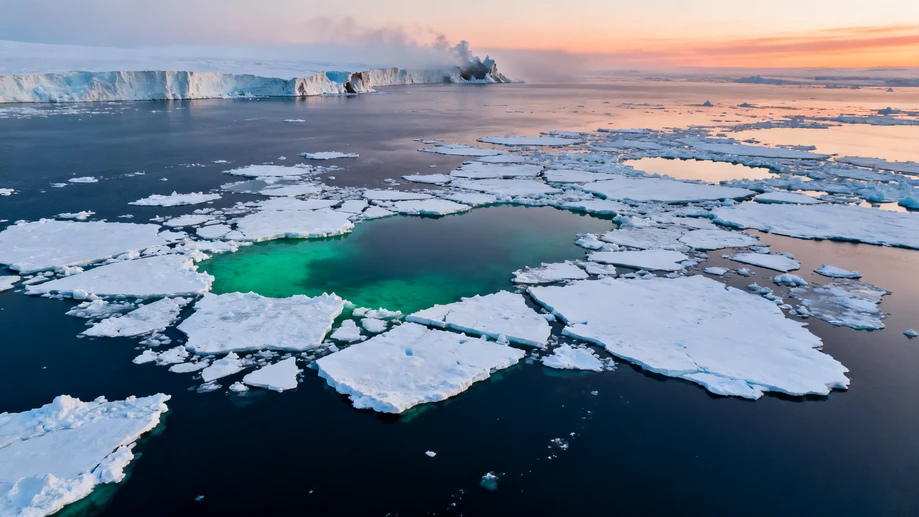
Picture this: Antarctica sheds enough ice every single minute to fill 480 Olympic swimming pools. That relentless melt isn't just a remote spectacle—it's a planetary alarm bell ringing in our backyards. Scientists tracking satellite data have watched in awe as Greenland's ice sheet, once thought stable, now hemorrhages over 280 billion tons annually. The Arctic, warming four times faster than the global average, has lost sea ice equivalent to twice the size of Alaska since 1979. This isn't science fiction; it's real-time geography rewriting itself, with frozen landscapes retreating like shy guests at a party that's getting uncomfortably warm.
Why should you care about distant glaciers? Because their fate is tangled with your morning commute and vacation plans. As polar regions heat up, they disrupt the jet stream—that high-altitude river of air steering weather systems. The result? Your "unseasonable" heatwave or paralyzing blizzard might trace back to weakened Arctic winds. When polar ice melts, it dumps freshwater into oceans, slowing down currents like the Gulf Stream that keep European winters mild. Imagine London feeling more like Moscow, or New York City facing intensified nor'easters. Even your coffee beans and wine grapes feel the ripple effects as erratic weather batters global agriculture.
The polar thaw is also triggering bizarre natural phenomena that read like plot twists in a thriller. In Siberia, melting permafrost has awakened ancient viruses and caused "zombie wildfires" that smolder underground through winter. Meanwhile, Antarctic researchers recently discovered "blood falls"—a crimson waterfall staining white glaciers, caused by iron-rich microbes trapped for millennia now escaping through cracks. Wildlife faces surreal challenges: polar bears swim record distances between shrinking ice floes, while walruses cram onto overcrowded beaches in scenes reminiscent of climate refugee camps. Even Earth's rotation is changing slightly as melted ice redistributes weight across the globe.
Here's the kicker: polar changes are accelerating faster than predictions. Scientists drilling ice cores—nature's climate archives—have found current CO2 levels are higher than any point in 800,000 years. Feedback loops amplify the crisis: dark ocean water exposed by melting ice absorbs more heat than reflective snow, accelerating warming. Antarctica's Thwaites Glacier, nicknamed the "Doomsday Glacier," could alone raise sea levels by 2 feet if it collapses. Coastal cities from Miami to Mumbai now plan for "sunny day flooding" as high tides creep higher. But there's hope: renewable energy adoption has surged 500% since 2010, and simple actions like reducing food waste collectively shrink carbon footprints.
The poles are Earth's air conditioning system, and we're fiddling with the thermostat. While the changes seem distant, their fingerprints appear in insurance premiums, supermarket prices, and weather alerts. Understanding this frozen frontier isn't just about saving penguins—it's about securing our shared tomorrow on a planet where every flake of melted ice writes a new chapter in human resilience.