
Are Polar Bears Turning into Landlubbers?
Scientists discover surprising climate adaptation as ice vanishes faster than predicted
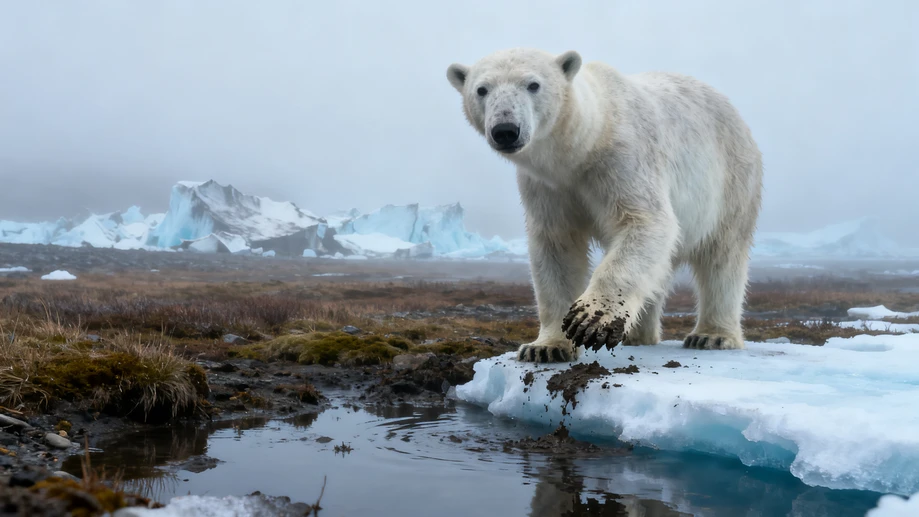
Imagine a polar bear strolling through an Arctic meadow, munching on berries instead of hunting seals. This isn't science fiction – it's the startling reality emerging from Canada's Hudson Bay. Researchers tracking polar bears via satellite collars have documented the animals spending unprecedented time on land during summer months. As sea ice retreats earlier each spring, the iconic predators are being forced ashore for weeks longer than their ancestors ever experienced. The bears now face a critical question: adapt or perish in their rapidly changing world.
Dr. Evan Richardson of Environment Canada explains the dietary shift: "We've observed bears consuming everything from bird eggs to caribou calves. One female even swam to an island colony and gorged on thick-billed murres." While this dietary flexibility seems advantageous, it comes at a cost. Land-based foods provide only one-third the calories of seal blubber. Bears lose over two pounds daily during these extended shore stays, weakening females before winter denning season. The survival rate of cubs born to undernourished mothers has dropped 25% in the past decade.
The transformation extends beyond diet. Polar bears are altering their movement patterns in unexpected ways. GPS data reveals bears now walk hundreds of miles along coastlines instead of drifting on ice floes. Some have developed "commuting routes" between persistent ice patches and terrestrial food sources. "They're becoming marathon walkers," says Norwegian researcher Magnus Andersen. "We tracked a male covering 1,200 miles in eight weeks – equivalent to hiking from Miami to New York." This extraordinary energy expenditure further strains their limited calorie reserves.
Indigenous communities witness these changes daily. Inuit hunter David Kango in Nunavut describes finding bears in unusual locations: "Last summer, a young male wandered into our berry-picking grounds. He ignored us completely, focused on stripping blueberry bushes." Such encounters highlight the bears' increasing desperation. Traditional knowledge warns that hungry bears near settlements pose new dangers, prompting communities to install bear-proof food storage and conduct nightly patrols during peak bear activity months.
Not all bears are adapting equally. Genetic studies reveal distinct subpopulations with varying resilience. Bears from the southern Beaufort Sea struggle most, experiencing 40% population decline. Meanwhile, those in the Canadian Archipelago, where ice persists longer, maintain relatively stable numbers. "It's becoming a tale of two Arctics," says conservation specialist Alysa McCall. "Bordering regions may lose bears entirely within twenty years while high-latitude strongholds endure." This patchwork survival map complicates conservation efforts across international boundaries.
The unfolding drama holds crucial lessons about ecosystem resilience. As polar bears pioneer new behaviors, seabird colonies and Arctic foxes face unexpected pressures from these apex predators exploring land-based options. Yet scientists caution against premature optimism. "Food substitution buys time but isn't a long-term solution," warns Richardson. "No terrestrial environment can support current polar bear numbers. Ultimately, their fate remains tied to sea ice." With projections showing ice-free summers by 2035, the clock ticks louder for these charismatic icons of the north.