
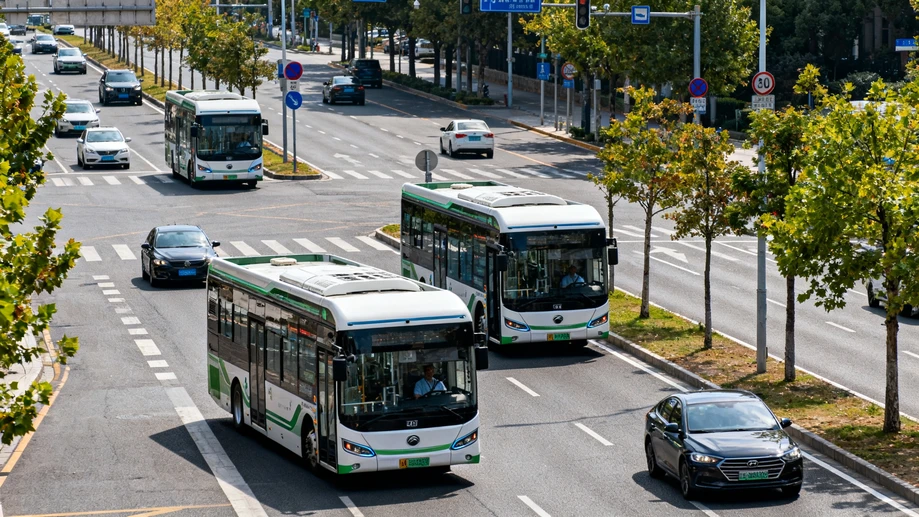
New under-road dynamic inductive charging system for moving electric vehicles opens on downtown public transit corridor
The 1.2-kilometer specially modified road segment supplies consistent power to moving electric vehicles without plug-in connections, cutting common range anxiety for daily urban commuters.
The first phase of the fully integrated public road went live earlier this month after 18 months of small-scale field testing and short closed-road trials, with local transport authorities releasing the first full week of operation performance data this Monday. Over the seven-day observation window, the segment served more than 1,270 electric vehicle trips across passenger cars, light delivery vans and full-size public transit buses, delivering an average real-time charging output of 11.2 kilowatts for vehicles passing along the dedicated 2.5-meter wide lane. Unlike earlier generation dynamic charging prototypes that only supported stable charging at speeds under 22 kilometers per hour, the new system maintains 98 percent of its maximum output when vehicles travel at speeds between 30 and 65 kilometers per hour, fully matching the standard speed limits for most urban central district roads across the region.
The entire system is built around ultra-thin copper induction coils embedded 5 centimeters under the asphalt surface, each sealed inside a wear-resistant polymer casing that adds less than 3 kilograms of weight per linear meter. Local construction teams completed the full installation in less than 72 hours of staggered overnight work, requiring no full road closures longer than six consecutive hours at any point, and restricting all high-impact work to the 2 a.m. to 6 a.m. low-traffic window when less than 2 percent of the corridor’s average daily traffic volume is recorded. Traffic monitoring data from the municipal transport department shows that average peak hour congestion on the corridor actually fell by 3.2 percent during the construction period, compared to the same 72 hour window in the previous month, an outcome far exceeding all pre-construction projections from traffic analysts.
One of the most widely cited concerns for previous dynamic charging road deployments was high energy transfer loss and high long-term road maintenance costs, but the first 30 days of pre-launch closed testing shows the new system achieves a total energy transfer efficiency of 92.3 percent, outperforming most common static home wireless EV chargers on the consumer market by more than 2 percentage points. The polymer casing covering all induction components has passed more than 120,000 simulated heavy vehicle rollover tests without any measurable deformation or performance degradation, and regular road condition inspections do not require any manual digging or physical contact with the embedded components. The municipal public works team confirmed that routine bi-weekly checks can be completed by a single sensor-equipped patrol vehicle traveling at regular road speeds, without disrupting any ongoing traffic on the corridor.
Local public transit operators have already integrated the new charging corridor into 12 of their most heavily used cross-city electric bus routes, and operational data shows these buses no longer require any mid-day stops to plug into fixed charging stations, eliminating the 72 minutes of average daily idle charging time per vehicle recorded before the new road system launched. The full elimination of mid-shift charging stops allows each of these buses to cover their full 18 hour daily operation schedule without returning to the central depot for extra power, cutting total annual operation downtime across the 12 vehicle fleet by more than 1,300 hours, and expanding available peak hour service frequency by 14 percent for nearby residential neighborhoods.
Operators of the new system announced that they will begin expanding the network with three additional connected routes stretching a combined 18 kilometers out to suburban commuter zones over the next 12 months, and all public electric vehicles and private passenger cars that carry on-board receiver units will have full free access to the entire network for at least 24 months after full expansion completes. Thousands of local commuters who already drive electric vehicles have shared feedback on public community platforms that their average weekly plug-in charging trips have fallen from 3.1 to less than 0.8 since the corridor opened, reducing the extra planning work required to schedule around charging stops during busy workdays. City transport planners note that the new infrastructure will not require any additional above-ground charging station construction, leaving all public sidewalks and roadside spaces available for pedestrian use and other public amenities.