
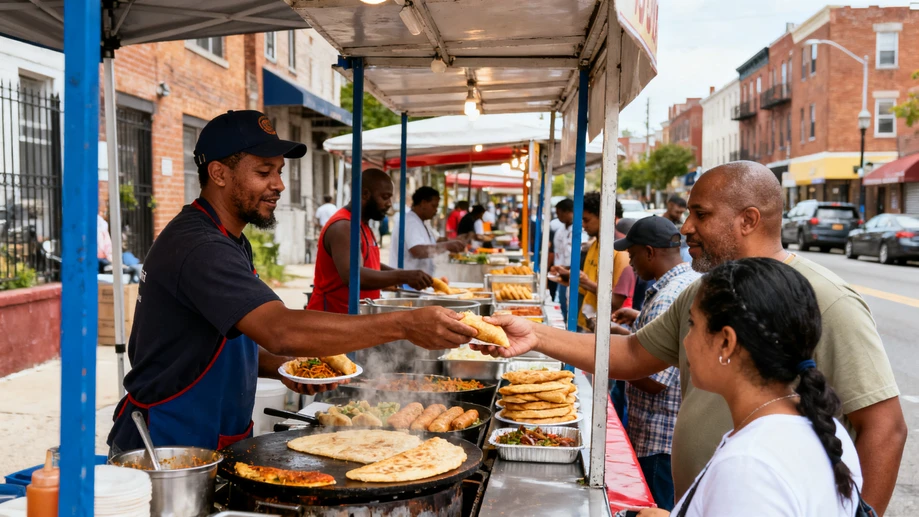
What Do Street Food Sellers Across Every Continent Share That No Global Policy Report Ever Bothered To Note
This unexpected international sociological finding comes from a casual side project by UN food researchers that was never meant to make front-page news
Last month, a small team from the Food and Agriculture Organization released a 47-page side report that flew almost entirely under the mainstream media radar, not because it contained explosive data or controversial policy recommendations, but because its entire focus was on the tiny, unwritten habits of small street food operators in 32 countries across Africa, Asia, Latin America and Southern Europe. The team did not set out to look for cross-border patterns at first; they were originally collecting data on how small food vendors cope with rising fuel and ingredient costs post 2022, and only noticed the bizarrely consistent trend after sorting through 1,200 interview transcripts. Almost every single vendor they spoke to, no matter what currency they used, what local regulations they operated under, or what type of food they sold, had deliberately kept the price of their most popular, entry-level menu item from rising more than 2% per year, even when local inflation for food items hit 12% or higher in the same period.
The research team followed up with 200 of these vendors to figure out why this pattern existed, and found there was no formal association, no shared guide, no social media campaign that told them to follow this rule. A 62-year-old tamale seller in Mexico City who has run her cart on the same corner for 38 years told researchers she has only raised the price of her signature $1.25 pork tamale three times in the last 15 years, even though corn prices have nearly doubled in that span, because most of her regular customers are construction day laborers who can barely afford to feed their kids as it is. A satay vendor in Jakarta who works a 14-hour shift every day outside a suburban factory said his signature 50 cent chicken skewer has stayed the same price for six years, and he covers the extra cost of peanut sauce and chicken by cutting back on his own personal grocery budget every month, rather than passing the cost on to factory workers who rely on his stall for their cheap lunch. Similar stories came from samosa sellers in Nairobi, crepe vendors in Lisbon, pani puri cart operators in Mumbai, and empanada sellers in Buenos Aires, all citing the same basic priority: do not make your most loyal regulars, who have supported your business through recessions, pandemics and bad weather, choose between buying your food and paying their rent.
Economists who reviewed the report later calculated that this widespread, unwritten agreement has created an informal, global grassroots safety net that has kept an estimated 12 million low-income urban people out of food insecurity in the last three years, during the worst global cost of living crisis in 40 years. Most of these workers have no formal savings, no access to government social welfare programs, and often go one or two weeks without pay when their employers run into cash flow issues, and almost all of them have reported being able to run up small tabs at their local street food stall for days at a time, no questions asked, when they are short on cash. For decades, international economic models have failed to account for this type of informal mutual support between small business owners and local communities, leading experts to consistently overestimate how many people will fall into extreme poverty during periods of economic downturn.
The report has already caught the attention of local municipal governments in more than 40 mid-sized cities around the world, who are now testing new support programs designed to work with this existing grassroots system, instead of replacing it. The city government of Lima, Peru, launched a pilot program earlier this year that gives small street food vendors a small monthly stipend to cover part of their cooking gas and raw material costs, as long as they keep the price of their lowest cost signature menu item stable, and the city reported last month that food insecurity rates in the neighborhoods where the program ran dropped by 18% in just six months. That is double the improvement seen in a previous program that distributed generic food vouchers to low income residents, because the new program keeps local social bonds intact, rather than inserting a bureaucratic middle man between vendors and their regulars.
We often see international news dominated by stories of grand summits, multi-national treaties and high-stakes diplomatic negotiations that take years of planning and millions of dollars to arrange, and we often forget that the real most powerful connections between people across borders are rarely designed in formal meeting rooms. This shared, unspoken promise between thousands of street food vendors across every continent to take care of their neighbors first is one of the most widespread examples of global solidarity in existence today, and it was never planned by any international organization, never written into any official document, and never even covered on the nightly news until this tiny research team stumbled across it. It turns out the thing that connects ordinary people across the world more than any policy or cultural trend is the quiet, consistent choice to take care of the people you see every day, no matter how tight your own budget gets.