
Did Common Sidewalk Trees Really Slash Millions of Local Household Air Conditioning Bills Last Summer?
The newly released 2024 global urban greenery report reveals a little-known economic benefit of ordinary street trees that most city residents have never noticed before.
Almost every resident in mid and low latitude cities still remembers the record-breaking heat waves that swept across 32 countries in the Northern Hemisphere last summer. Millions of households kept their air conditioning units running for 12 to 16 hours a day to avoid indoor temperatures climbing above 35 degrees Celsius, leading to surging electricity bills that drew widespread public discussion. Most city administrators planted sidewalk trees with the original goals of absorbing carbon dioxide, reducing noise and adding natural scenery to concrete blocks, and no one expected that these ordinary, unremarkable plants would produce a direct, measurable economic benefit far beyond everyone’s predictions. The collaborative research team behind the latest report collected 3 years of anonymous utility data, satellite canopy mapping and on-site temperature monitoring records from 17 large and medium sized cities across 4 continents, and cross referenced every variable to rule out interference from other factors like building orientation, wall material and nearby public cooling facilities.
The core mechanism behind the surprising data is far simpler than most people assume. A mature broadleaf tree that is 20 to 30 years old can evaporate roughly 400 liters of water through its leaves and root system every hot summer day, which acts like a continuously operating natural cooling system that does not blow out hot exhaust air like a traditional air conditioner. This natural process can lower the ambient temperature within a 30 meter radius around the tree by 2 to 4 degrees Celsius, and block 70 percent of direct solar radiation that would otherwise hit roads, exterior walls and windows of nearby residential buildings. The research team found that on the same residential street with identical apartment layouts, household units sitting on the tree-lined side had 12 to 17 percent lower total summer electricity consumption for cooling, compared to units sitting on the opposite side with no mature trees for shade. The gap was large enough that many local residents started noticing the difference on their monthly bills after the research results were shared on local community social media pages.
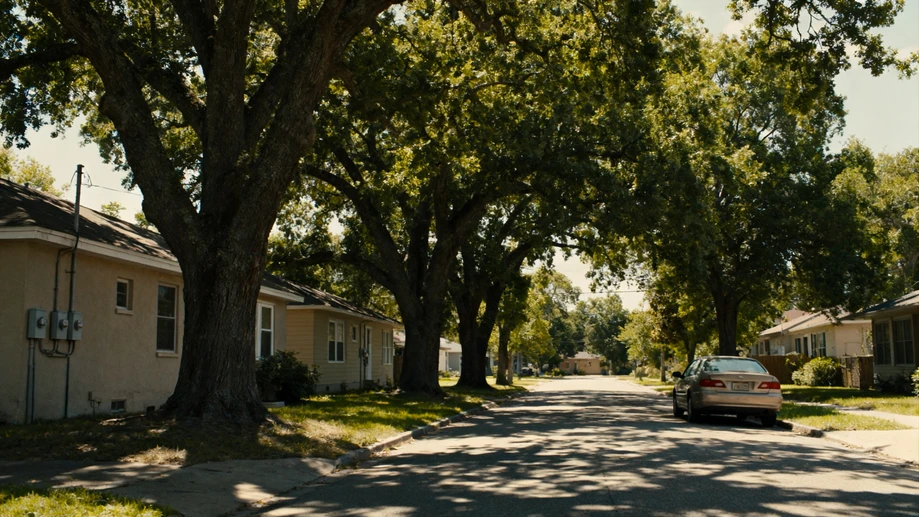
The research team actually stumbled on this unexpected result by accident, while they were carrying out a project to map the hottest heat island spots across urban neighborhoods. Their original plan was to identify blocks that needed more government subsidies to install temporary water spray cooling systems and reflective pavement, but the data analysis showed that many older residential blocks that were not equipped with any high tech cooling facilities had far lower average summer electricity bills than new central business districts full of glass skyscrapers. These old neighborhoods did not have fancy new public cooling infrastructure, but they had rows of 40 to 50 year old trees whose canopies connected to cover more than 75 percent of the entire street area. The paved road surface in these blocks never climbed above 52 degrees Celsius even on the hottest days, while road surfaces in nearby blocks without trees hit 65 degrees Celsius under the same weather conditions. The shaded exterior walls of apartment buildings stayed at 27 degrees Celsius, compared to 35 degrees Celsius on unshaded buildings, meaning residents did not have to run their air conditioners at full power all day long to keep their indoor space comfortable.
These findings have already driven major policy adjustments in over 20 cities around the world in 2024. Many local governments that previously planned to cut down mature trees to widen sidewalks or prune tree canopies to make space for new street lamp installations have revised their plans, and added new planting targets for native broadleaf trees. Cities including London, Toronto and Seoul have all launched small subsidy programs for local residents: people who sign up to water and take care of the trees outside their own homes every month get a direct 15 to 25 dollar discount on their summer electricity bill. Many residents who previously complained about fallen leaves clogging their gutters and dirtying their car windows now actively sign up for these programs, because they calculated that two mature trees outside their apartment can save them more than 120 dollars on air conditioning costs over the whole summer.
This public discovery also breaks a common misconception that people have about solving frequent summer heat waves. For a long time, city planners believed that they needed to invest in expensive high tech solutions like special reflective road coatings, large scale outdoor cooling spray systems and solar panel shaded public pavilions to reduce urban heat, but all these facilities have high operating costs and service lives of no more than 3 years. A regular sidewalk tree costs less than 200 dollars to plant and maintain in its first two years, and it can keep providing natural cooling benefits for 70 years or longer with minimal care. After the report was released, hundreds of local community groups around the world launched small tree planting activities, and many residents even raised native saplings on their balconies before transplanting them to public roadside spots. No one thought the quiet trees that people walk past every single day without a second glance would turn out to be the most cost effective, low effort solution that helps millions of households cut their living costs amid worsening summer heat.