
Can Your Money Outlive You?
The secret life expectancy of your banknotes and why some currencies survive longer than others
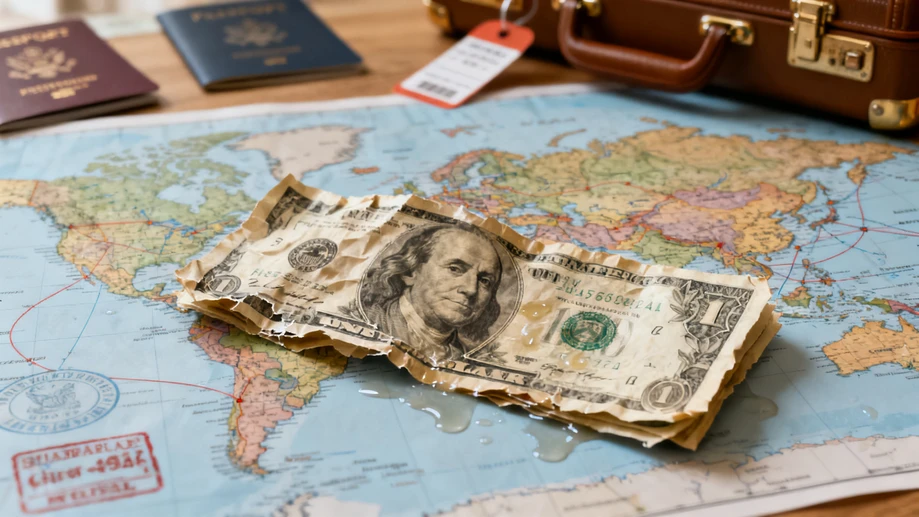
Paper money might seem sturdy when fresh from the ATM, but it leads a surprisingly brutal existence. Every banknote endures constant punishment – crammed in wallets, dunked in coffee, crumpled in pockets, and occasionally even surviving washing machines. This physical abuse determines how long currencies survive in circulation, creating a global hierarchy of resilient and fragile money. What few realize is that your cash has a scientifically calculated expiration date. The lifespan varies wildly: while a Swiss franc might survive two decades, a Mexican peso often lasts mere months before disintegrating.
Central banks operate elaborate forensic labs dedicated to banknote autopsies. Technicians examine thousands of daily submissions using microscopes and chemical tests, classifying each note's condition like emergency room doctors. Notes with stains exceeding 1.5 square centimeters automatically fail inspection. Those with tape repairs or more than two tears longer than 10mm get shredded immediately. Surprisingly, developed nations see higher failure rates because their automated sorting machines detect microscopic flaws invisible to humans. The average euro gets retired after 18 months, while Canadian polymer notes survive 7-10 years without fading.
Currency endurance plays a hidden role in global economics. Countries with fragile money face higher printing costs – India spends $1.4 billion annually replacing rupees. Polymer notes pioneered by Australia have revolutionized durability, resisting water, dirt, and even explosives. When Nigeria introduced polymer naira notes, counterfeiting dropped 98% instantly. Yet material science alone doesn't guarantee longevity. Thailand's baht survives longer than Singapore's dollar despite both using cotton blend paper, proving that public handling habits matter just as much as composition. Japanese citizens famously treat yen with ceremonial care, extending its life beyond 5 years through cultural reverence.
The afterlife of banknotes reveals unexpected sustainability stories. Modern recycling transforms shredded currency into construction materials – Brazil mixes real banknote confetti with concrete. Meanwhile, collectors hunt "star notes" replacement bills with asterisks in serial numbers, while misprinted "error bills" command astonishing premiums. During the 2020 coin shortage, the US Treasury publicly begged citizens to spend hoarded change, highlighting how currency circulation patterns impact national liquidity. With cash payments declining globally, some nations now embed expiration dates on digital currency prototypes, ensuring technological obsolescence mimics physical decay.
Banknote lifespans will undergo radical changes as new threats emerge. Antimicrobial money entered circulation during the pandemic, with Hong Kong testing zinc-coated bills that kill bacteria. Scientists are developing self-healing polymer notes that repair minor scratches. Meanwhile, the European Central Bank tracks GPS-tagged banknotes across continents to study circulation physics. As climate change accelerates, humidity-resistant money becomes crucial – tropical nations now use mold-inhibiting ink. The ultimate survivor? British pounds containing animal gelatin survive underwater for 72 hours. Next time you fold a bill, remember: you're holding a marvel of material engineering designed to outlast countless hands and wallets.