
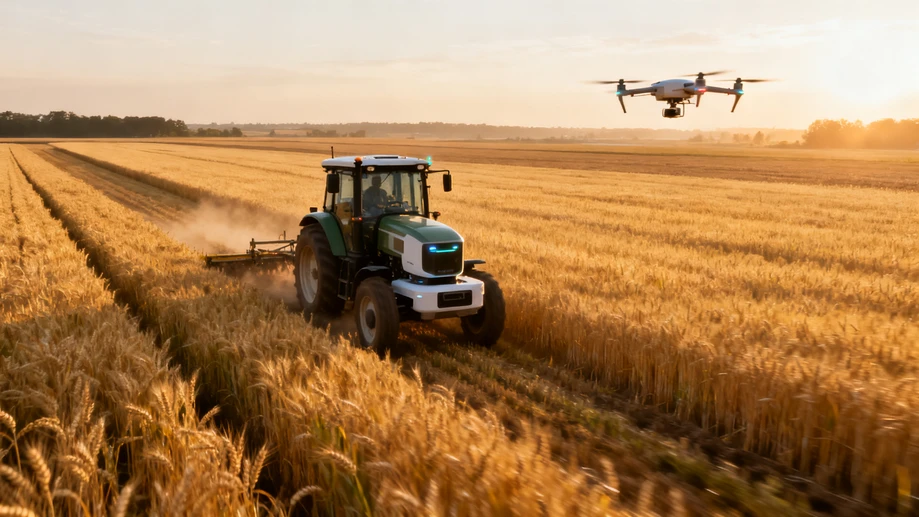
The Rise of Autonomous Farm Equipment is Reshaping Agriculture
Self-driving tractors and AI-powered drones are transforming traditional farming practices with unprecedented efficiency
Across golden wheat fields and lush orchards, a quiet revolution is unfolding as autonomous machinery takes center stage. Farmers worldwide are adopting self-navigating tractors that operate with centimeter-level precision, guided by real-time GPS and sensor data. These intelligent machines work around the clock, unaffected by fatigue, while optimizing fuel consumption and reducing soil compaction. The transition marks a fundamental shift from manual operation to data-driven agriculture, where algorithms analyze field conditions to make split-second decisions about planting depth and speed. This technological leap addresses chronic labor shortages while boosting productivity in ways previously unimaginable.
Agricultural drones have evolved beyond simple aerial photography into sophisticated crop management systems. Equipped with multispectral cameras, these flying sentinels capture detailed plant health data invisible to the naked eye. They detect early signs of disease, nutrient deficiencies, or pest infestations long before human scouts would notice. What makes this particularly fascinating is how drones now deploy targeted micro-sprays only where needed, slashing chemical usage by up to 70%. During pollination season, specialized drone swarms mimic bees' movement patterns to supplement natural pollinators—an innovation gaining urgency amid declining bee populations.
Soil sensors represent another breakthrough quietly transforming farm management. Buried beneath the surface, these unassuming devices continuously monitor moisture, temperature, and nutrient levels, transmitting data to cloud-based platforms. Here's an interesting fact: modern sensors can distinguish between 18 essential soil compounds using electrochemical analysis, allowing precise fertilizer application. This granular understanding prevents both under-nourishment and toxic runoff, creating a closed-loop system where inputs perfectly match crop needs. The real magic happens when these sensors integrate with irrigation systems, automatically watering specific zones only when sensors indicate necessity.
Despite the excitement, challenges persist in rural technology adoption. Connectivity issues plague remote farmlands, with many areas lacking reliable broadband for real-time data transmission. Cybersecurity concerns also emerge as farm operations become increasingly digitized. Yet solutions are materializing through low-earth orbit satellite networks and edge computing devices that process data locally. Manufacturers now design equipment with modular upgradability, allowing farmers to retrofit existing machinery with autonomy kits rather than purchasing entirely new fleets—a cost-effective approach accelerating implementation.
The economic implications extend beyond individual farms to global supply chains. Reduced operational costs and higher yields could stabilize food prices while minimizing waste. Emerging markets show particular promise, where mobile-based farming apps deliver drone-collected insights directly to smallholder farmers' smartphones. As machine learning algorithms grow more sophisticated through accumulated field data, we approach a future where predictive analytics prevent crop failures before they occur. This technological convergence positions agriculture not just as a food producer, but as a data-driven industry redefining humanity's relationship with the land.