
Is Your Morning Coffee Heating the Planet?
How daily rituals secretly fuel the climate crisis – and what you can brew instead
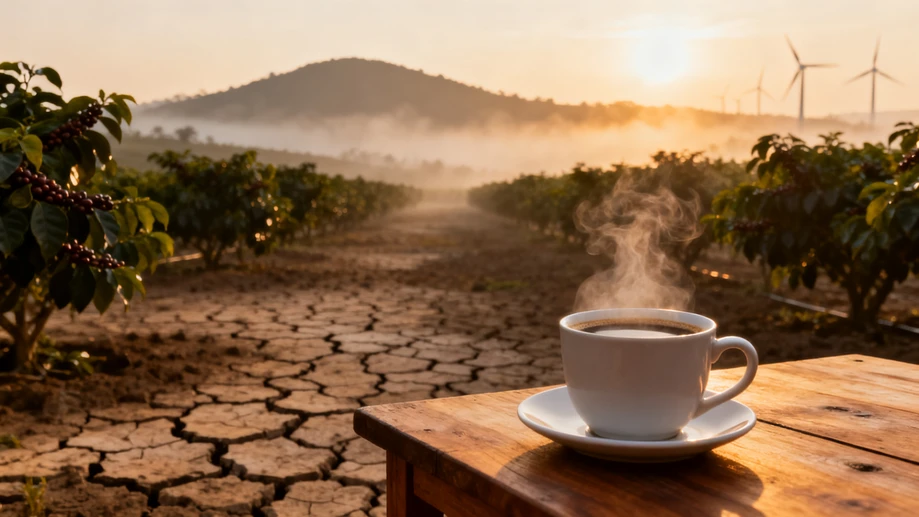
That steaming cup of coffee kickstarting your day carries more than caffeine. From Brazilian farms to your kitchen, each bean travels a carbon-intensive journey. Agricultural deforestation for coffee plantations releases 15 million tons of CO2 annually – equivalent to 3 million cars circling Earth. Meanwhile, energy-guzzling roasting facilities and transcontinental shipping add layers to your drink's invisible carbon blanket. The real wake-up call? Global coffee demand has surged 60% since 1990, turning our collective caffeine fix into a climate contributor few consider over their morning mug.
Zoom out beyond coffee cups, and everyday patterns reveal startling connections. Your smartphone's cloud storage? Data centers now consume 1% of global electricity, often powered by coal. Online shopping sprees? Each delivery van emits 200 grams of CO2 per package. Even your dinner plate plays a role: food systems generate 34% of human-caused emissions, with beef production alone rivaling the exhaust of every plane in the sky. These mundane habits collectively form what scientists call "behavioral emissions" – the overlooked climate footprint of normalized routines.
Nature responds with increasingly dramatic feedback. Coral reefs now bleach at 1.5°C warming – a threshold we'll breach by 2030 at current rates. Arctic permafrost, thawing 70 years ahead of predictions, leaks ancient methane that accelerates heating. Perhaps most viscerally, pollen seasons have expanded by 20 days since 1990, turning seasonal allergies into year-round misery for 25% of adults. These aren't distant warnings but tangible changes reshaping lives today, from extended wildfire seasons choking cities to "sunny day flooding" in coastal neighborhoods during high tides.
Transformation hides in plain sight. Switching to oat milk in that coffee slashes its footprint by 60%. A single meatless day weekly saves emissions equal to driving 1,160 miles. Even tech habits matter: streaming in standard definition instead of 4K reduces data load by 80%. Cities demonstrate scalable solutions too: Copenhagen's bicycle highways cut 90,000 tons of CO2 yearly, while Milan's vertical forests absorb 30 tons of carbon annually. These practical pivots prove climate action isn't about sacrifice, but smarter daily choices.
Collective behavior shifts create ripple effects beyond carbon math. When Barcelona pedestrianized streets, asthma rates dropped 13%. Amsterdam's circular economy experiment created 700 green jobs while halving construction waste. Most encouragingly, renewable energy adoption follows a social tipping point curve: once 10% of a community installs solar panels, adoption becomes contagious. The emerging lesson? Personal changes spark cultural transformations that accelerate systemic solutions – turning individual sips of coffee into a global wave of climate resilience.