
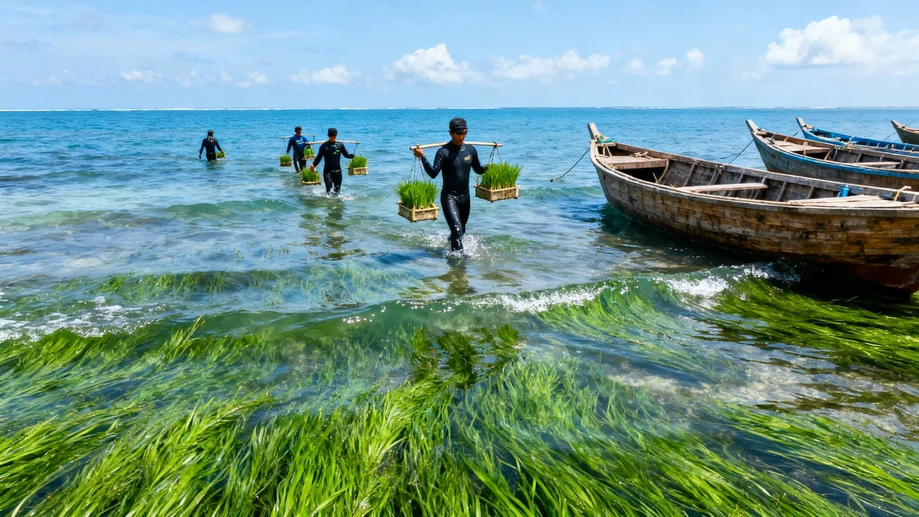
Who Would Have Guessed a Small Coastal Seagrass Volunteer Project Changed Seven Nations’ Climate Rules This Year
This under-the-radar citizen initiative has delivered more verifiable carbon reduction outcomes than many high-profile intergovernmental campaigns in the past 12 months.
If you regularly scroll through top global news headlines, you have likely seen countless reports of long climate summits, hours of tedious diplomatic negotiations, and dozens of grand environmental pledges that rarely translate to real, on-the-ground changes for regular people. Almost no mainstream international news outlet paid attention to a tiny group of recreational divers based in a small Portuguese coastal town back in 2019, when they first decided to do something about the bare, sandy seabed they encountered on every weekend dive. The region’s once lush seagrass meadows had shrunk by 92% over 40 years of unregulated coastal development, overfishing and mild ocean pollution, and the group of dive instructors did not wait for government funding or official research permits to launch their own restoration trial. They collected naturally shed seagrass seeds from remaining healthy patches, tied them to small biodegradable mesh frames, and asked every dive tourist who joined their daily trips to help place these frames on the empty seabed during their dives, no specialized training required.
Word of the tiny local project spread far faster than anyone expected. Travelers who joined the volunteer dive activities brought the idea back to their own home coastal communities, first in nearby southern Spain, then across the Strait of Gibraltar to the fishing towns of North Africa, then to coastal regions of western France, Mauritania, Senegal and the United Kingdom. By 2022, the loose volunteer network had no formal administrative headquarters, no paid full-time staff, and no large corporate sponsorship, but it already connected more than 12,000 local residents ranging from small-scale fishermen to surf coaches to primary school teachers across seven nations. No one framed the work as a grand global climate campaign at the time; most participants simply saw it as a way to bring back the fish they used to catch when they were children, or make the coastal water clearer for their kids to swim in during summer holidays.
The first large unexpected payoff came in 2023, when independent marine researchers from the University of Alicante ran a random survey of the restored seabed areas and found that the collective volunteer effort had revived 2,370 hectares of healthy seagrass meadows across the seven participating nations. Seagrass is one of the most efficient natural carbon sinks on the planet, capable of sequestering 10 times more carbon per hectare per year than tropical rainforests, and the restored meadows also began to act as natural breeding grounds for hundreds of fish and shellfish species. Local small-scale fishermen reported an average 42% rise in their annual catch between 2021 and 2024, and coastal water clarity improved by an average of 57% in the restored zones as the seagrass trapped floating sediment and filtered out pollutants. None of these positive results appeared in any official national climate progress report until the 2024 UN Global Ocean Conference held in Nice, France, when a group of 15 local fishermen from the seven nations walked onto the event stage with stacked printed copies of their local catch logs and water quality test results.
The presentation from the group of ordinary citizens shocked the attending national environment officials far more than dozens of polished policy presentations from international research institutions. Within three days, the seven nations represented by the volunteer network signed a joint non-binding agreement to allocate a combined 128 million US dollars of their national climate budgets to community-led seagrass restoration projects over the next five years, and to roll out unified cross-border standards to monitor seagrass health and prevent unregulated trawling in protected meadow zones. This marks the first time a cross-border climate policy framework covering multiple nations was directly initiated and drafted based on data collected and verified by non-professional citizen volunteers, rather than proposed by official diplomats or specialized research teams. Local participants also reported that cross-border disputes between artisanal fishing teams that used to break out over contested fishing zones dropped by 68% over the past two years, as different coastal communities now share seagrass health data and agree on temporary no-fishing periods across national maritime borders together.
The volunteer network now runs a simple free mobile app that lets any water sports enthusiast upload photos of seagrass patches they encounter while diving, surfing, sailing or even kayaking, to update the collective health map of all connected meadow zones. The total operating cost of this citizen data collection system is only 14% of the estimated cost of running the same monitoring program with professional research vessels and full-time marine biologists, and the dataset now covers three times more coastal area than any official government-led seagrass monitoring project in the northeast Atlantic region. This quiet, unhyped international initiative has proven that global environmental governance does not always have to happen in grand conference halls with complicated bureaucratic procedures, and small, grounded actions from regular local people can eventually ripple out to change policies across an entire continent.