
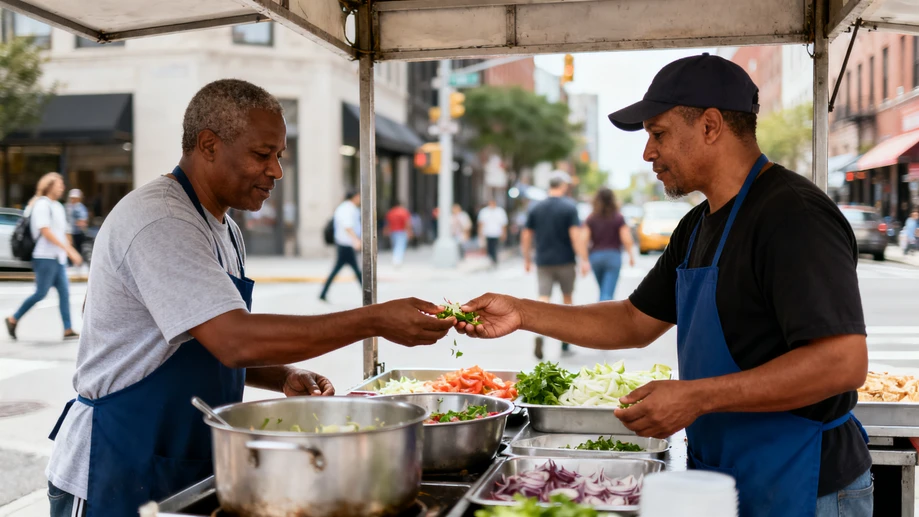
Who would have guessed 2024’s most unexpected global climate win comes from street food vendors
This underreported cross-border grassroots movement connects millions of informal street food operators to cut food waste far faster than most top-down government policies could ever achieve.
Last month, the Food and Agriculture Organization of the United Nations released a little-cited quarterly progress report on global food waste reduction, and its top data point caught even veteran sustainability analysts completely off guard. The report noted that across 12 low and middle income countries in Southeast Asia, East Africa and Latin America, loosely connected networks of unregistered street food vendors had cut collective food waste by more than 232,000 tons in the 18 months leading up to July 2024. That number is higher than the total combined household food waste reduction recorded across all five Nordic nations over the same period, a region widely recognized as a global leader in personal climate action. Almost no major international news outlets covered the milestone at all, because it did not come attached to high profile corporate pledges, government summits or multi-million dollar grant programs, and almost no one outside the small groups of vendors themselves knew the scale of the changes they were making.
The entire movement started completely by accident in Nairobi, Kenya in 2022, when a small group of 17 local street food operators shared a single WhatsApp group to coordinate leftover food handouts to unhoused people in their neighborhood after closing time. After three months, they realized most of their unsold stock that went to donation could have been reused to generate extra income if they passed it to nearby vendors who could repurpose the ingredients, instead of giving all of it away for free. They adjusted their informal system to trade excess stock for small amounts of cash or other ingredients, and the group grew to 200 local vendors in less than six months. Similar small, unconnected trading groups popped up independently in Bangkok, Thailand and Medellin, Colombia at around the same time, as vendors noticed they were throwing away perfectly edible leftover rice, grilled meat, cut fruit and dough at the end of every day for no practical reason. Because almost all of the participating street stalls are located less than 50 meters from each other on the same commercial blocks, the entire transfer process adds almost no extra transport emissions, and requires no third party logistics platform to facilitate.
It took more than a year for small global non-profit networks that focus on informal worker rights to notice these scattered local groups, and their leadership made a very deliberate choice not to disrupt the existing system with complicated tech tools or formal oversight. Instead of building a custom mobile app or introducing strict tracking rules, they simply set up a low traffic global group chat that allowed vendor representatives from different countries to share their own local tricks for reusing leftover ingredients with each other. Taco vendors in Mexico shared their recipe for fermenting leftover pineapple cores into a sweet iced drink that they could sell for extra profit, and the method quickly spread to banh mi vendors in Vietnam who started using pickled leftover mango and papaya as a low cost filling for their sandwiches, cutting individual stall daily food waste by an average of 62%. Roasted corn vendors in Tanzania shared their method for turning leftover overcooked corn kernels into seasoned snack mixes, and the idea was adapted by mango sticky rice vendors in Indonesia to repurpose leftover coconut rice into crispy fried treats. None of these practices required any kind of special funding or training, and almost all of the new methods were tested and adjusted by vendors themselves to fit local customer preferences.
The unplanned side benefits of this cross-border informal sharing have turned out to be even more impressive than the food waste reduction numbers. Many city governments have spent decades trying to introduce basic food safety standards to unregulated street food markets, but top-down inspection and fine systems usually breed mistrust and push vendors to hide their operations from municipal authorities. The ingredient sharing networks, by contrast, have allowed safety tips to spread organically between vendors, with experienced operators showing newer peers how to store leftover ingredients safely at no extra cost, and how to spot early signs of spoilage before ingredients become unsafe to use. A 2024 survey of 3,000 participating vendors found that formal customer reports of foodborne illness linked to street food stalls in the program dropped by 47% over 12 months, and dozens of local city councils have since started offering free small insulated food storage boxes to participating vendors without requiring them to jump through complicated and expensive formal business registration processes.
What makes this global movement so remarkable is that it has no official name, no central headquarters, no paid leadership team and no formal requirements for participation. Most vendors taking part in the local networks have no idea how many other people across the world are doing the exact same thing as them, and many told survey researchers that they joined the scheme simply because it let them earn an extra 15 to 20 percent of income every week without working extra hours, not because they set out to fight climate change. Independent economists who have studied the program estimate that the total cost per ton of avoided carbon emissions from the whole network is less than 0.2 US dollars, making it the lowest cost large-scale climate action project ever documented in the world. For decades, most mainstream discourse around global climate solutions frames change as something that has to be designed by experts, funded by billionaires, or mandated by national governments, but this quiet, uncoordinated, grassroots movement has proven that the most effective global change can sometimes bubble up from the most ordinary daily choices made by people who just want to waste a little less of the work they put in every single day.