
Do You Ever Wonder How Tree Whispers Shape Our Planet?
The hidden language of forests that's rewiring ecosystems worldwide.
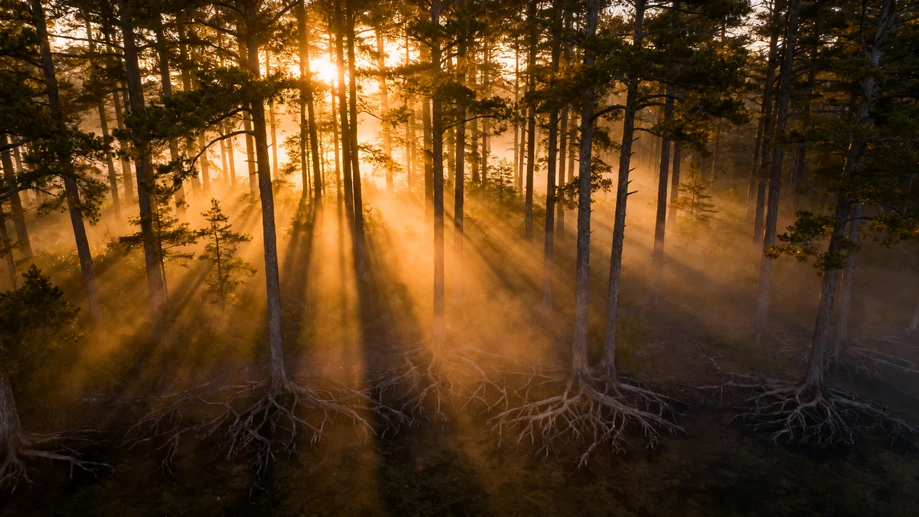
Deep within ancient woodlands, a silent conversation unfolds beneath our feet. Trees are talking - not with words, but through an intricate underground network dubbed the "Wood Wide Web." Scientists have discovered that fungi filaments connect tree roots across entire forests, creating a biological internet where nutrients, warnings, and even distress signals travel faster than human gossip. This subterranean communication highway allows Douglas firs to nourish struggling saplings, oaks to alert neighbors about insect attacks, and beeches to coordinate seed production cycles across continents. The revelation is transforming ecology: forests behave less like collections of individuals and more like superorganisms with collective intelligence.
What happens when trees "speak" across species lines? Remarkably, this network transcends botanical boundaries. Birch and fir trees engage in reciprocal carbon trading, while sickly pines receive immune-boosting compounds from healthy companions. During drought, water redistributes from deep-rooted elders to thirsty seedlings via fungal pipelines. These exchanges aren't random charity; trees keep score. Research shows they reward cooperative partners with extra nutrients while isolating "selfish" individuals. The system even enables grandmother trees to recognize their genetic descendants, prioritizing support for seedlings that carry their legacy. Forget passive greenery - we're surrounded by calculating botanical communities.
The implications ripple beyond forests. This arboreal intelligence helps regulate Earth's climate more efficiently than any human-engineered system. Mature trees in interconnected networks capture 40% more carbon than isolated specimens. Their cooperative defense systems reduce pest outbreaks that would otherwise require chemical interventions. When wildfires strike, mycorrhizal networks accelerate regeneration by directing resources to fire-resistant species. Scientists are now mapping these fungal highways using DNA analysis, revealing continent-spanning "hub trees" that function like botanical servers. Protecting these elders becomes crucial - their removal collapses entire communication grids, making forests vulnerable to climate shocks.
Human activities are disrupting this delicate dialogue. Monoculture farming severs fungal connections, creating "silent forests" where trees grow isolated and defenseless. Logging operations unknowingly destroy critical hub trees, equivalent to deleting entire data centers. Even casual hikers compact soil, crushing the fragile fungal threads beneath their boots. The consequences manifest in mysterious "forest dementia" - disconnected trees show stunted growth, increased disease susceptibility, and bizarre behaviors like producing seeds at the wrong season. Reforestation efforts now prioritize preserving mycorrhizal networks, with nurseries inoculating saplings with local fungi before planting to rebuild broken connections.
The most astonishing discovery? Trees remember. When attacked by insects, they not only warn neighbors but store this information in cellular "memories." Subsequent generations inherit heightened defenses, demonstrating transgenerational immunity. Acorns from caterpillar-besieged oaks grow into trees with extra-tough leaves. This botanical intelligence operates on timescales humans can barely comprehend - a single fungal network may persist for millennia, accumulating ecological wisdom through centuries of climate shifts. As we decode this arboreal internet, we're learning that forests aren't just collections of trees. They're living libraries, their roots writing Earth's oldest continuous story in the language of chemistry and connection.