
Can Bees Really Dance? The Secret Language of Honeybees
Unlocking the Mysterious Waggle Dance That Helps Bees Communicate and Survive
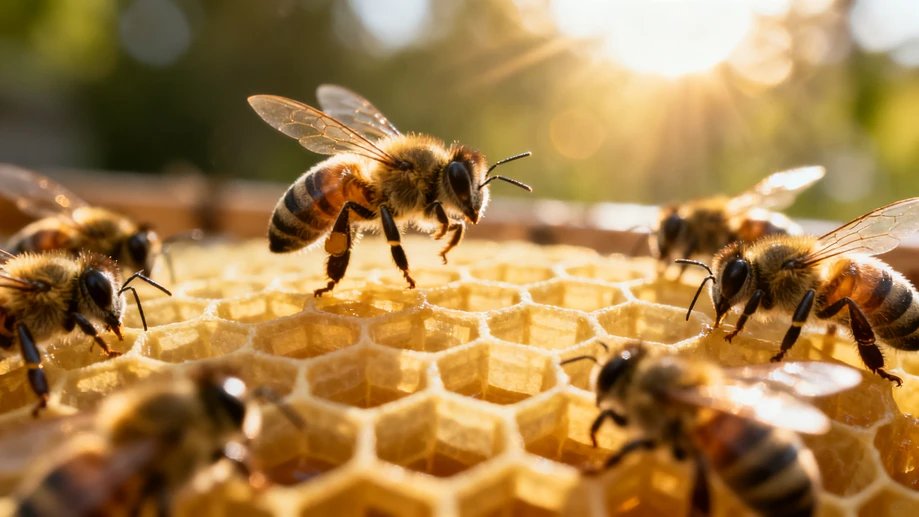
Imagine a tiny creature performing an intricate dance to give GPS coordinates to its friends. This isn't science fiction—it's the daily reality inside every beehive. Honeybees perform a sophisticated "waggle dance" to share vital information about food sources, water locations, and potential new nesting sites. When a scout bee discovers a promising flower patch, she returns to the hive and dances in a figure-eight pattern on the vertical honeycomb. The angle of her dance relative to gravity indicates the direction of the treasure relative to the sun, while the duration of her waggling middle reveals the distance. Fellow worker bees follow her movements, decoding the message through antennae vibrations and touch. This remarkable behavior transforms the hive into a living communication network where dance moves become survival instructions.
The discovery of this dance language by Austrian scientist Karl von Frisch in the 1940s revolutionized our understanding of animal intelligence. Using glass-walled observation hives and painstaking experiments, von Frisch deciphered the dance's code: each waggle run pointed straight toward the sun's position when indicating due direction. For example, a dance angled 60 degrees to the right of vertical meant "fly 60 degrees right of the sun." Distance was measured by dance tempo—a one-second waggle might equal 1 kilometer. The dancer even adjusts her message based on the sun's movement during the day. This sophisticated system allows bees to communicate locations up to 10 kilometers away with astonishing accuracy, outperforming many early human navigation tools.
Modern research reveals even more complexity. Bees incorporate "stop signals" – short vibrations that interrupt dances to prevent overcrowding at food sources. They evaluate the dancer's credibility based on her success history and adjust their response to the quality of nectar described. High-sugar nectar triggers longer, more enthusiastic dances that recruit more followers. Remarkably, bees account for wind drift during flight by adjusting their dance angles. When relocating swarms seek new homes, scout bees perform dances on the swarm cluster's surface to "debate" locations, with the most vigorous dancer eventually winning consensus. This democratic decision-making process ensures the colony chooses optimal nesting sites through collective intelligence.
This dance language faces modern challenges. Climate change disrupts floral bloom cycles, forcing bees to constantly update their dance maps. Pesticides like neonicotinoids impair their navigation skills, causing "misinformation dances" that lead colony members to dead zones. Urbanization creates food deserts where dances point to distant, fragmented resources. Scientists now use high-speed cameras and AI algorithms to analyze dance patterns as early indicators of environmental stress. Conservationists create "bee highways" with continuous floral corridors to support reliable dance coordinates. Some beekeepers even place hives near specific crops, ensuring the first spring dances direct pollinators exactly where farmers need them most.
Beyond pollination, the waggle dance inspires human technology. Roboticists design swarm robots that mimic bee communication for search-and-rescue missions in collapsed buildings. Data scientists study hive decision-making to improve crowd-sourcing algorithms. Architects create ventilation systems modeled after the hive's temperature-regulated dance floor. Most remarkably, decoding this dance helps us appreciate non-human intelligence—a creature with a brain smaller than a sesame seed solving complex spatial problems through movement. As we face global biodiversity loss, protecting these dancing navigators becomes crucial. Their survival ensures not just honey production, but the continuation of an ancient language that turns sunlight into dance and flowers into coordinates.