
Do You Know Almost All Global Cross-Border Digital Data Travels Through Cables Hidden Deep Under the Ocean
This lighthearted deep dive explores little publicized real-world details of the global undersea cable network that ties billions of people across continents together every single day.
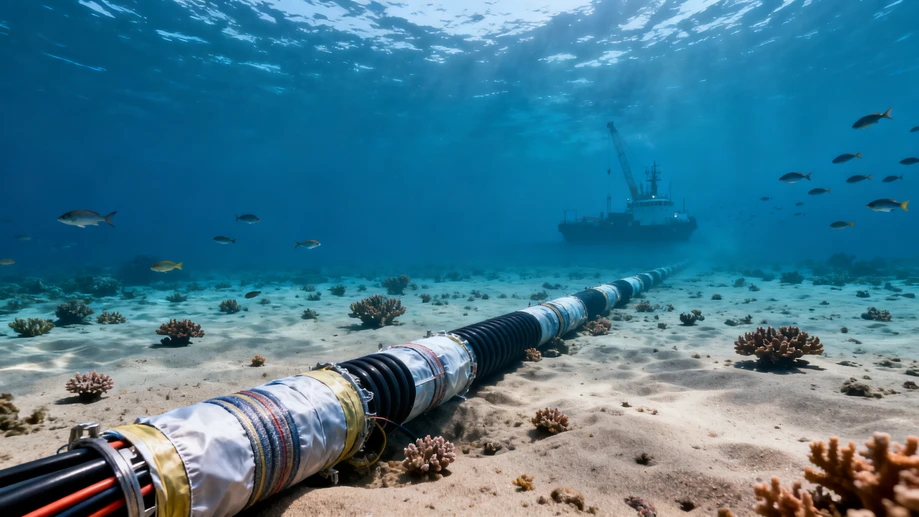
The vast majority of people scroll through international social media feeds, make video calls to family members living on other continents, or send work emails to overseas colleagues on a daily basis, and most have long assumed cross-border digital data travels through the air via orbiting communication satellites. This widespread misunderstanding is one of the most persistent fun misconceptions about modern global connectivity, as verified by 2024 data from the International Telecommunication Union, more than 99 percent of all cross-border internet traffic actually moves through physical cables laid across the seabed, many of which rest thousands of meters below the ocean surface where no human will ever see them with their own eyes. The full global undersea cable network stretches over 1.4 million kilometers in total, long enough to wrap around the Earth’s equator more than 35 times, and individual cables themselves are far sturdier than most people imagine: the thickest segments deployed in shallow coastal areas look like oversized fire hoses, layered with waterproof polyethylene, reinforced steel armor, corrosion resistant copper wraps, and specialized optical fibers at their core, built to withstand huge physical pressure and all kinds of unexpected disturbances.
ITU public reports from the past three years show that around 100 to 150 accidental undersea cable outages happen across the world every year, and over 70 percent of these incidents are caused by fishing trawlers dragging their heavy nets across the seabed, or large cargo ships dropping their anchors in unplanned shallow water zones. Only a tiny fraction of outages are caused by natural events like underwater earthquakes, icebergs scraping the seabed as they drift, or even sharks nipping at the outer cable layers out of curiosity. One widely shared little incident from 2023 saw a fishing trawler operating off the coast of western Ireland accidentally hook a segment of cable connecting the European mainland to eastern Canada, pushing cross-Atlantic internet latency up by over 220 milliseconds for nearly 3 million users across the United Kingdom, France and parts of Germany. No ordinary user could identify the exact cause of the small slowdown for the first 48 hours, until maintenance crews dispatched on a specialized cable repair ship located the damaged segment, and the full story spread across global internet communities, spawning hundreds of viral memes comparing the random fishing boat to an accidental global internet saboteur.
Few international news outlets ever cover the massive cross-border coordination work that goes into building and maintaining this shared global network, because the behind-the-scenes operations are far removed from high profile political events. No single government or private corporation owns the full global undersea cable system, every new cross-continental cable project is jointly funded and managed by teams from 5 to 12 different countries, with contributors ranging from major telecom firms to local ocean conservation non-profits. For every new cable route planned, teams bring in marine geographers, maritime law experts, and even local marine biologists to survey every kilometer of the planned path, to avoid active fault lines, sensitive coral reef habitats, and critical breeding zones for endangered sea turtles and migratory fish. In 2022, a planned new cable connecting Singapore to northern Australia had its full route adjusted 180 kilometers further out into the open ocean, after survey teams found the original planned path would pass through a large protected seagrass meadow that supported thousands of local dugong populations, with project stakeholders agreeing to pay an extra 13 million U.S. dollars for the detour with no public fanfare at all.
Many recent discussions about new generation low earth orbit satellite internet have led to widespread speculation that undersea cables will become obsolete in the near future, but technical data shows this is not likely to happen for at least the next 30 years. A single modern undersea optical fiber can carry over 200 terabits of data per second, enough to stream over 4 million high definition movies at the exact same time, and the total cost of transmitting one terabyte of data through an undersea cable is less than one tenth of the cost of transmitting the same amount via satellite. Even when all planned next generation satellite constellations are fully deployed in the coming decade, their total global data carrying capacity will still not add up to 5 percent of the existing undersea cable network’s total throughput. The small crews working on cable repair ships, who spend 6 to 8 months a year at sea operating remotely operated underwater vehicles to retrieve, splice and re-bury damaged cable segments, rarely make mainstream news headlines, but their quiet, routine cross-border work is the invisible backbone that keeps the whole modern global digital ecosystem running seamlessly for every user on every continent.