
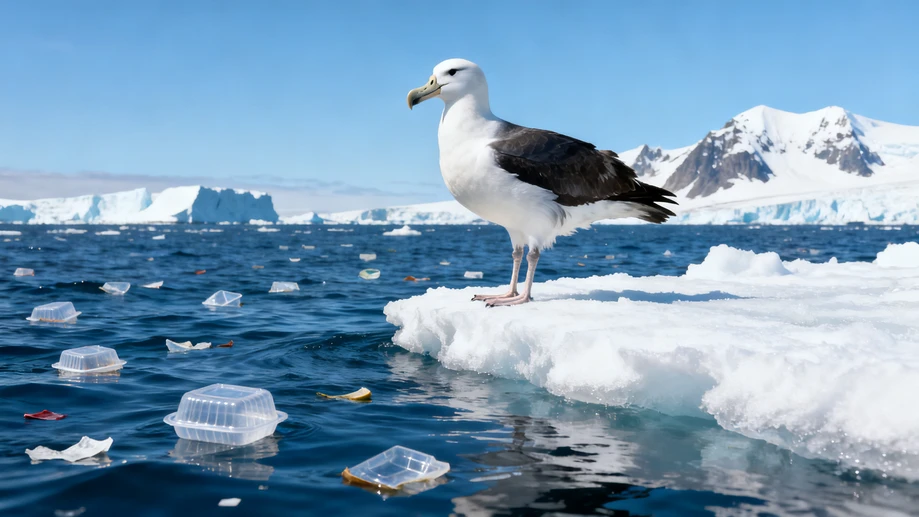
Did You Know Takeout Plastic Waste Has Been Circling Antarctic Currents For Over a Decade
A 18-month long citizen science survey tracking waste samples from Southern Ocean seabird colonies uncovers the unexpected long journey of everyday disposable items most people throw away without a second thought
Last summer, a small team of volunteer wildlife observers sailed to the remote sub-Antarctic island of South Georgia, where they spent 6 weeks sorting through regurgitated waste left behind by wandering albatrosses, giant petrels and other seabird species that spend 90 percent of their lives flying over open ocean. What they found stunned even experienced conservation groups: more than 40 percent of the hard plastic fragments they collected carried faint, partial branding marks that matched takeout food containers sold across South America, South Africa and southern Australia back in the early 2010s. None of these fragments showed signs of breaking down into microplastic at the expected rate experts wrote about in official public reports a few years ago, which means a single half-eaten salad container tossed on a city sidewalk 12 years ago could have drifted thousands of kilometers, gone through three full loops of the Antarctic Circumpolar Current, and ended up stuck in the stomach of a 7-year-old albatross chick that has never once touched land outside its remote breeding colony.
The team did not run any fancy modeling programs or use high-end research equipment to map out how these pieces of plastic traveled from busy city streets to the frozen waters near Antarctica. Instead, they cross-referenced their physical sample data with three sets of completely public, freely available datasets: 20 years of real-time tracking data from thousands of drift buoys deployed by global weather organizations, community submitted photos of beach plastic taken by regular coastal cleanup volunteers across the Southern Hemisphere, and old menu packaging records uploaded by fast food chain archives online. The final path they mapped out was far faster than any previous research had predicted. A piece of lightweight takeout plastic that gets washed into the ocean near Buenos Aires, Cape Town or Sydney will not take 30 years to reach the edge of the Antarctic ice shelf as old estimates claimed. It only takes a little over 3 years to get swept into the cold, fast-moving ring of water that circles the entire southern continent, and then it will keep looping that exact same current for decades until it either gets eaten by a seabird, washes up on a remote ice beach, or finally breaks down into tiny pieces that spread across every part of the global ocean.
The most surprising detail from the entire survey came from one small, crumpled plastic fragment found half buried under a pile of penguin feathers. The tiny, faded logo on its corner was quickly recognized by one of the volunteer team members, who used to work at a regional fast food chain that opened its very first location in a small town outside Santiago, Chile, back in 2011. That particular plastic design was only used by the brand for 18 months before they switched their packaging style, which means that single small fragment had been drifting across the open southern ocean nonstop for 11 full years, without ever getting caught in a fishing net, washing up on a populated beach, or breaking apart into smaller bits. This single discovery upended a lot of common assumptions about ocean plastic waste, because most people think their discarded takeout containers either get dumped in a local landfill, or wash to some patch of floating garbage in the north Pacific. Almost no one ever imagines that a normal lunch box they used for 15 minutes can end up traveling all the way to one of the most remote, untouched wild spaces on the entire planet.
Thankfully, the survey results also came with a piece of unexpectedly good news for regular people who want to cut down their personal impact on Antarctic ecosystems, without having to make huge, drastic changes to their daily lives. The team compared data from 12 small coastal towns across New Zealand that launched a simple public education campaign 5 years ago, asking all residents to rinse out their takeout plastic containers before tossing them into recycling bins, and never leave loose plastic trash on sidewalks or park lawns. They found that after 5 years, the amount of takeout plastic drifting into the southern edge of the ocean from that region dropped by 27 percent, and the number of plastic fragments turning up in local seabird stomachs fell by nearly a third. That is a far faster drop than any government ban on single use plastics has delivered in the same time frame, because most of the loose takeout plastic that ends up drifting all the way to Antarctica gets washed into storm drains from small bits of carelessly discarded trash on sidewalks, not from poorly managed industrial waste or overflowing landfills.
Right now, anyone who lives in a coastal city anywhere in the Southern Hemisphere can join this global effort to track down floating plastic before it drifts all the way south, no special degrees or expensive equipment required. All people have to do is take a clear photo of any piece of branded plastic they find during a beach cleanup, upload it to a free public community science platform, and add a short note about where and when they found it. Those photos get added directly to the global dataset that researchers use to map plastic drift paths, and every extra data point helps conservation groups design better targeted local education campaigns that stop waste from reaching Antarctic currents in the first place. No one has to fly thousands of kilometers to the frozen southern continent to protect its wildlife, every small, careful choice people make while handling their everyday disposable items adds up to a real, measurable difference for the albatrosses and penguins that call that remote part of the world home.