
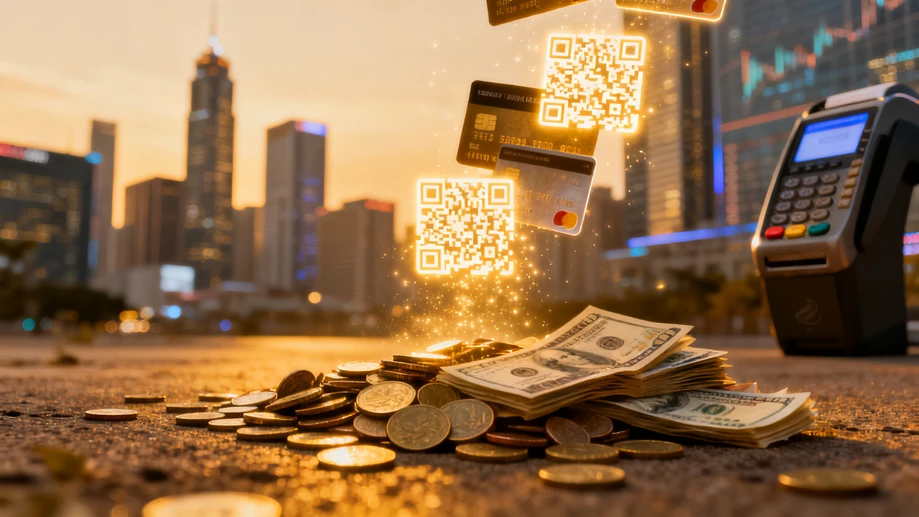
Have You Noticed Your Wallet Getting Lighter? It's Not Just Weight Loss!
The invisible revolution reshaping money from Stockholm to Singapore
Picture this: you're standing at a bustling Swedish coffee shop. The person ahead orders a latte, waves their watch near a sensor, and walks away. Behind them, a tourist nervously fumbles with unfamiliar coins. In this quiet Stockholm café, we see the global tipping point between physical cash and its digital successor. Money's physical form isn't just disappearing - it's evaporating at unprecedented speed. From Stockholm's cashless cafés to Singapore's hawker centers where QR codes outnumber coins, the tangible currency that once jingled in pockets is becoming a relic. This isn't merely technological change; it's a complete reimagining of value exchange that leaves ATMs gathering dust and vending machines demanding smartphone handshakes. The question isn't whether cash will vanish, but when it becomes as rare as handwritten checks.
Central banks worldwide aren't just watching this transformation - they're racing to control it. Over 90% of monetary authorities are exploring digital currencies, with China's e-yuan pilot reaching 260 million wallets and the European Central Bank's digital euro entering testing phases. These aren't cryptocurrencies but sovereign money in digital clothing, promising instant settlements and programmable features. Imagine welfare payments that can only buy groceries or business loans that self-distribute when sales targets hit. The Bahamas launched the world's first CBDC, the Sand Dollar, after hurricanes exposed cash's vulnerability. But the revolution holds contradictions: digital currencies could give governments unprecedented economic steering power while creating 24/7 programmable money. The financial infrastructure underpinning this shift is being rebuilt beneath our feet, with traditional banks scrambling to adapt their vaults-to-clouds strategies.
Commerce's frontlines reveal the real battleground. When Brazilian street vendors started displaying QR codes during the pandemic, cash transactions plummeted 35% nationwide. Kenya's mobile money system M-Pesa now processes over half the country's GDP through phones. Even historically cash-loving nations are converting: over 80% of German Christmas markets now accept contactless payments. This tectonic shift creates winners beyond tech giants - South Korean fintech firm Viva Republica saw valuation triple as cashless payments soared. Yet physical money leaves an economic shadow: the US spends $200 billion annually handling cash. As digital transactions hit 1.3 trillion globally this year, the efficiency gains could inject $3.7 trillion into world economies by 2030. The flipside? Digital exclusion risks leaving behind rural communities and aging populations still holding banknotes.
Behind the sleek interfaces lie fascinating economic ripples. Sweden's cash disappearance has police rethinking bank heists as obsolete crimes, while some retailers report spontaneous 15% higher spending with tap payments. Singapore hawkers noticed customers spend 30% more when using QR codes versus coins. Data becomes the new currency goldmine - contactless systems generate valuable spending maps that reshape inventory decisions. But vulnerabilities emerge: cyberattacks on payment platforms surged 300% since 2020, and electrical outages can paralyze cashless economies. The privacy paradox deepens as governments balance fraud prevention against surveillance concerns. "We're trading jingle for data trails," notes an IMF fintech advisor. Physical money's anonymity faces extinction as digital footprints create permanent financial diaries.
This revolution redistributes global financial gravity. Emerging markets leapfrog traditional banking - India processed 89 billion real-time payments last year, dwarfing America's 11 billion. Cross-border transactions are transforming: Ripple's blockchain network settles international payments in seconds instead of days. Yet regulatory fault lines appear between jurisdictions embracing innovation and those protecting legacy systems. The invisible infrastructure race is escalating: undersea cables between Singapore and Europe now carry more financial data than oil tankers transport crude. As digital currencies gain traction, they could erode the US dollar's dominance in trade settlements. The long-term impact? A more connected but potentially fragmented global economy where money moves like light while regulators run marathons.
So where does this leave everyday wallets? Physical currency won't vanish overnight, but its retreat seems inevitable. Some economists predict coins and notes will become specialist items within a decade, like travelers' checks today. Businesses face adaptation pressure - even historically cash-only sectors like garage sales join Venmo. Counterintuitively, physical cash develops new prestige: Japan releases beautiful collectible bills, while Switzerland's tactile banknotes become luxury items. The future might hold hybrid solutions: offline digital payments for emergencies or audio-based transactions for visually impaired users. This quiet revolution won't announce itself with fanfare but through accumulating moments - when taxi drivers decline cash, when donation boxes display QR codes, when your own wallet feels suspiciously thin. Money hasn't disappeared; it's simply become invisible.